
Feeling stuck trying to pick the right hot tub size? We break down the benefits…

Concrete Pad For Hot Tub – 8 Questions To Ask Your Contractor (2026)
While hot tub and swim spa installations shouldn’t be complicated, it’s important to get a quality licensed concrete contractor that will answer a few important questions.

Do you know how much hot tubs weigh? A medium-sized hot tub that seats six people usually has about 400 gallons of water. The water alone weighs 3,300 lbs. That’s a ton and half! Installing a nearly two ton object on your property requires a concrete slab or base as the hot tub foundation. This probably means contacting a concrete contractor to pour the concrete base for you.
We’re going to show you the questions to ask the concrete contractor so you get a solid level foundation you can count on. Here’s what you’ll learn:
- Understanding Concrete Pads: Discover the significance of a concrete pad as a foundation for hot tubs. The concrete pad should be flat, 6-8 inches thick, and placed on compressed ground.
- Technical and Design Considerations: Looks at the crucial aspects of size, thickness, drainage, and electrical setup for your hot tub’s concrete pad.
- Post-Installation and Maintenance: Learn about the maintenance needs, warranties, and guarantees associated with concrete pad installation.
Let’s dive in with the key questions and practical details to ensure your hot tub concrete pad meets all requirements and lasts for years.
Table of Contents
Show
Top 8 Questions for Your Contractor About a Concrete Pad for Hot Tub
Since a concrete pad is essential for a stable hot tub foundation, asking the right questions ensures your contractor builds it correctly. Here are eight specific questions to discuss with your contractor for a durable concrete base for hot tub in 2026.
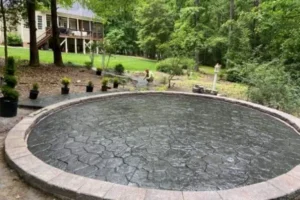
#1. How Will You Prepare the Site for the Concrete Pad?
Proper site preparation is critical to prevent settling or cracking. Ask your contractor about their process for clearing, leveling, and compacting the ground to ensure a stable base.
- Ground Assessment: How will you evaluate soil stability and address any issues like soft spots?
- Excavation Depth: What depth will you excavate, and will you add a gravel base for better drainage?
- Compaction Methods: What equipment do you use to compact the soil, and how do you verify it’s sufficiently compressed?
A well-prepared site is key to meeting hot tub pad requirements and avoiding future problems.
If you are still deciding where the spa will go, our guides on hot tub placement and how to prep your yard for a hot tub walk through choosing and preparing the spot before the contractor arrives.
#2. What Thickness and Reinforcement Will You Use for the Pad?
The pad must support the hot tub’s weight without cracking. Discuss the planned thickness and reinforcement to confirm it suits your hot tub model.
- Thickness Specifications: Why do you recommend 6-8 inches, and does this align with local codes for hot tubs?
- Reinforcement Options: Will you use rebar, wire mesh, or fiber reinforcement, and how does this enhance durability?
- Load Calculations: How do you calculate the required strength based on the hot tub’s filled weight?
How thick should a concrete pad be for a hot tub? Typically 6-8 inches with reinforcement to handle the load.
#3. How Do You Determine the Ideal Size for My Hot Tub’s Concrete Pad?
The pad size affects stability and accessibility. Ensure it extends beyond the hot tub for maintenance and safety.
- Dimensions: How much larger should the pad be than the hot tub, and why?
- Access Considerations: Will the size allow room for steps, equipment, or future upgrades?
- Local Regulations: How do building codes influence the minimum size?
Discuss hot tub concrete pad size to ensure it’s adequate, often 10×10 feet or more for medium tubs.
#4. Can You Incorporate Drainage Solutions into the Pad Design?
Effective drainage prevents water pooling and staining. Ask about sloping or other features to direct water away.
- Slope Design: What slope will you use for drainage without affecting hot tub levelness?
- Additional Systems: Will you include French drains or other features if needed?
- Landscape Impact: How will drainage avoid erosion or damage to surrounding areas?
The maximum slope for hot tub stability is typically 1-2%.
#5. How Will You Handle the Electrical Conduit for the Hot Tub?
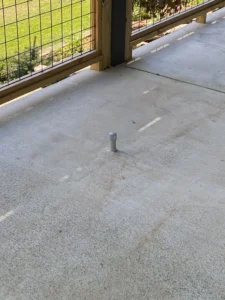
When installing the concrete pad, it’s common to place the electrical conduit underneath the hot tub for a smooth and protected connection. However, Epic Hot Tubs does not drill access holes for electrical wiring; that is the responsibility of the electrician.
- Conduit Placement: Where will you position the conduit to align with the hot tub’s electrical needs?
- Code Compliance: How do you ensure the setup meets electrical codes for hot tubs?
- Coordination with Electrician: What steps do you take to help the electrician’s work?
Proper conduit integration is crucial for safe hot tub operation.
#6. What is the Installation Process for a Concrete Pad?
Understanding the process helps set expectations and timelines. Confirm the steps for a quality pour.
- Preparation Stage: What site prep is involved before pouring?
- Pouring Process: How do you ensure a smooth, even surface?
- Quality Checks: What measures prevent issues like air pockets?
Curious about how to pour a concrete slab for a hot tub? It starts with site prep, followed by pouring at the right thickness.
#7. How Do I Maintain the Concrete Pad Post-Installation?
Maintenance ensures longevity. Ask about care routines and inspections.
- Cleaning Practices: What methods keep the pad in good condition?
- Repair Signs: How do I spot and fix cracks early?
- Protective Treatments: Should I apply sealants, and how often?
Look for contractors offering periodic inspections.
#8. What Guarantees or Warranties Do You Provide for the Work Done?
A good warranty shows confidence in the work. Clarify coverage details.
- Duration and Coverage: What does the warranty include and for how long?
- Claim Process: How do I report issues?
- Exclusions: What isn’t covered, like weather damage?
Concrete Pad for Hot Tub: Cost, Thickness, and Curing Time
Planning a concrete pad for hot tub near me? Here’s a quick breakdown of the concrete pad for hot tub cost, hot tub pad thickness, and curing timeline to help you prepare.
| Aspect | Details |
|---|---|
| Concrete Pad for Hot Tub Cost | $500–$2,500, depending on size, location, and labor |
| Concrete Pad Thickness for Hot Tub | 6-8 inches, reinforced with rebar or mesh |
| How Long Should Concrete Cure Before Putting a Hot Tub on It | 28 days for full structural strength |
The hot tub concrete pad cost can climb if your site has a slope or requires extra prep. Ask your contractor for a detailed quote to avoid surprises.
Concrete Pad for Hot Tub – What Is It?
A concrete pad for hot tub is a flat, sturdy surface made of concrete, specifically designed to support the weight and operational requirements of a hot tub. It must be a perfectly level and flat surface for your hot tub installation. This will create a solid foundation that lasts for years and years.
Whether you’re installing a hot tub on concrete slab or a slab for hot tub, the pad needs to meet specific hot tub concrete pad requirements, like a concrete pad thickness for hot tub of at least 6-8 inches and proper reinforcement.
Essential Questions for Understanding the Basics
One of the things most people don’t know is how much does a hot tub weigh? But once you realize it’s a ton, two tons, or more, you’ll understand the importance of this foundation. Here are some basic questions to ask your contractor:
- What makes concrete the ideal foundation for hot tubs?
- How does the pad prevent structural issues over time?
- What local codes apply to hot tub foundations?
Technical and Design Considerations
There is a wide range of things to think about for the technical specs for your foundation. The worst thing is base failure due to poor planning. So, talk to the contractor about these issues:
- How will you ensure the pad is perfectly level?
- What concrete mix do you use for hot tub pads?
- How do you account for freeze-thaw cycles in colder climates?
Post-Installation and Maintenance Queries
Your cement pad for hot tub is going to be in your yard for a long, long time. This means you want a contractor who stands behind their work and is willing to address any problems that might arise. Ask about:
- What immediate post-pour care is needed?
- How often should I inspect the pad?
- What signs indicate the need for professional repair?
Frequently Asked Questions
What is the Recommended Thickness for a Concrete Pad for a Hot Tub?
Local building codes vary, but the most common specification is for a hot tub concrete pad to be at least 4 inches thick and reinforced with some material such as aggregate or rebar. If you are using concrete footers for a deck, these should be at least 8 inches thick. For optimal support, many experts recommend a hot tub concrete pad thickness of 6-8 inches, especially for larger models. Check with your contractor to confirm how thick the slab should be for your setup.
How Thick Should a Concrete Pad Be for a Swim Spa?
A swim spa is far heavier than a hot tub once filled, so the pad matters even more. Plan on the same reinforced 6-8 inch thickness recommended for hot tub pads, and ask your contractor to run load calculations from the filled weight of your specific model instead of guessing. Local building codes may add their own requirements, so confirm them before the pour.
What Size Concrete Pad Do I Need for a Hot Tub?
The pad should be larger than the hot tub itself so you have room for steps, equipment, and maintenance access. For a medium-sized hot tub, that often means a pad of 10×10 feet or more. Local building codes can influence the minimum size, so confirm the final dimensions with your contractor before the forms are set.
How Much Does It Cost to Install a Concrete Pad for a Hot Tub?
The cost of installing a concrete pad for a hot tub can vary widely depending on factors like size, location, and labor rates. On average, homeowners might spend between $500 to $2,500. It’s important to get a detailed quote from your contractor that includes all costs associated with the project.
Can I Install a Hot Tub on an Existing Concrete Patio or Does It Need a Separate Pad?
A hot tub can often be installed on an existing concrete patio, provided the patio is level, in good condition, and meets the thickness and reinforcement requirements for supporting a hot tub. If the existing patio doesn’t meet these criteria, a separate pad may be necessary.
What Are the Necessary Preparations for Installing a Concrete Pad for a Hot Tub?
Preparations for installing a concrete pad include clearing the site of debris, ensuring the ground is level, and setting up forms to pour the concrete into. The area should also be accessible for concrete delivery. Additionally, consider any underground utilities and ensure proper drainage around the site.
How Long Does It Take for a Concrete Pad to Cure Before I Can Place My Hot Tub on It?
Concrete is dry enough to walk on 24-48 hours after the pour and hard after about a week, but a 4 inch slab does not reach full structural strength until about 28 days. Plan on 28 days of curing before your hot tub is placed and filled, and check with your concrete installer about your specific mix and climate. The full three-stage curing timeline is below.
There are three different stages of curing:
- Concrete is “dry” between 24-48 hours after being poured. It will be safe to walk on without leaving footprints.
- Concrete is “hard” after about a week. This is when additional construction could take place. But it is not at its full strength yet.
- A 4″ concrete slab is “cured” and at “structural strength” after about 28 days. This is when your hot tub can be installed and filled.
Always check with your concrete installer or retailer for details about your specific concrete and climate to adjust your curing times correctly.
How long does concrete need to cure before putting a hot tub on it? For a concrete hot tub pad, plan on 28 days to ensure it’s fully cured and ready for your hot tub on concrete slab.
Wrap Up
By addressing these questions, you’ll ensure your hot tub’s concrete pad is built to last. This comprehensive approach provides peace of mind and years of enjoyment.
Ready to build a concrete pad for spa pool or spa concrete slab? Use these questions to find a contractor who delivers a high-quality pad for hot tub tailored to your needs.
If you’re still searching for the perfect hot tub, here are a couple of articles that could help you:
Of course, it would be even better to call our team at Epic Hot Tubs. We’ll be happy to answer your questions, show you a demo model, and help you find the right concrete contractor for your job.
Have questions, or want to see options in person? Stop by any of our five North Carolina showrooms and talk it through with our team: Raleigh, Durham, Sanford, Charlotte, or North Charlotte. We are open 7 days a week, no appointment needed.

Ready to purchase a hot tub or swim spa in NC?
Call us at 888-884-3742 or fill out the form below to get in touch with a member or our team.

About The Author:
Richard Horvath
Hot Tub & Spa Expert
Richard has been in the hot tub & spa industry for years. As a long hot tub & swim spa owner himself, Richard has a passion for helping homeowners create their dream backyard, helping over one thousand North Carolina homeowners achieve that dream in the process.


