
Being a first time hot tub buyer can be tricky. We're sharing our favorite tips…

How Does a Hot Tub Work? Things to Know Before Buying
You’re ready to turn your backyard into a private paradise with your brand new hot tub, but how do they work and what do you need to know before you buy?
How does a hot tub work? What makes it tick? And why should you care? Hot tubs are great for relaxing after a long day at work or playing sports. They also provide a way to unwind from stressful situations.
Hot tubs are a type of spa that uses water heated to a certain temperature to provide relaxation. The water is circulated through jets that shoot out into the air, creating a soothing massage effect. Why does it matter how they work as long as they work their magic on your tired muscles or BBQ party?
Here are three quick reasons you should care about how they work:
- Understanding how they work helps you compare hot tubs to find the right one for you
- Learning about how the plumbing and controls work will help you avoid maintenance issues
- Knowing how your hot tub works can help you use it in a cost-effective way
Now you know why you should investigate, let’s get into it.
Table of Contents
Show
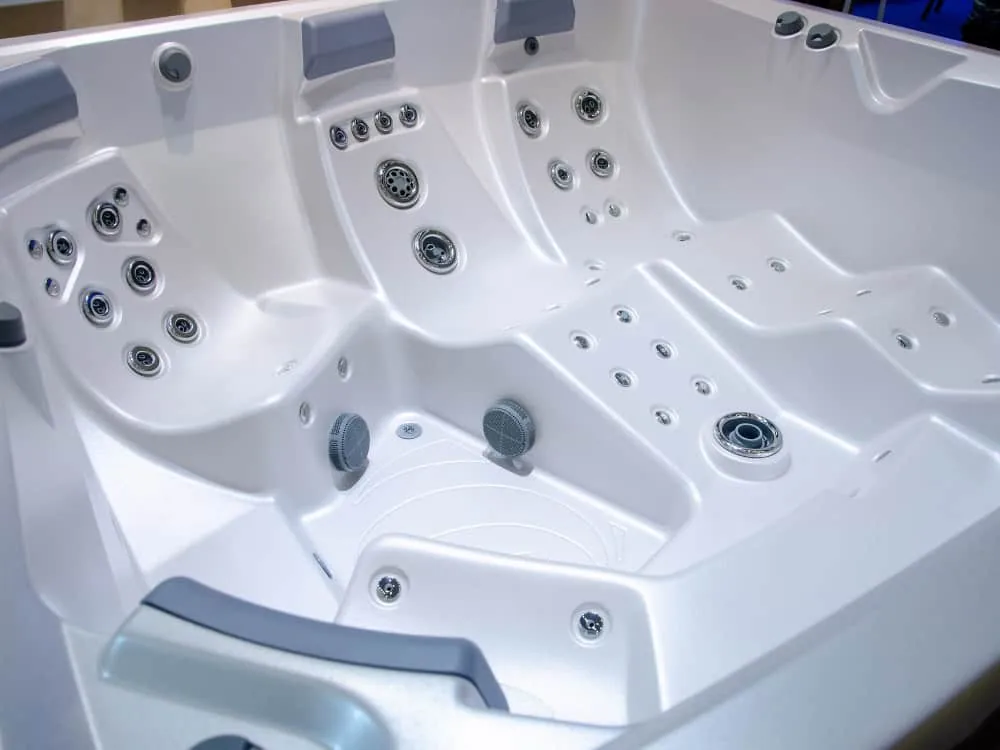
How Do Hot Tubs Work? A Step-by-Step Guide
Curious about how hot tubs work? At its core, a hot tub is a marvel of engineering that combines water, heat, and pressure to deliver relaxation. To understand how a hot tub works, let’s break it down into a clear, step-by-step process that explains how water is heated, circulated, and jetted back into the tub.
- Water Intake: The process begins as water is drawn from the hot tub through a suction line, typically via a skimmer and floor drain, into a single pipe leading to the pump.
- Pump Circulation: A powerful pump pulls the water through the system and pushes it toward the heater and jets. This is how hot tubs stay hot and active.
- Filtration: Before heating, the water passes through a filter to remove debris and impurities, ensuring it stays clean as it circulates.
- Heating: Next, the water flows into a heater, usually electric or gas-powered, where it’s warmed to your desired temperature. This answers how hot tubs heat water efficiently.
- Jet Action: Finally, the heated water is pumped back into the tub through jets, mixing with air to create that signature massage effect you love.
How does a hot tub heat up so reliably? It’s all thanks to a thermostat that maintains the temperature and insulation that keeps the heat in. Whether you call it a hot tub, jacuzzi, or spa, the principle remains the same, delivering warm, soothing water through a closed-loop system.
What to Know About Hot Tubs Before You Buy
Before investing in a hot tub, there are key factors to understand about how they operate and what you’ll need. Here’s what to know about hot tubs to ensure you choose the right one and enjoy it for years.
| Aspect | Details |
|---|---|
| Power Needs | Hot tubs are powered by electricity (13-32 amps) or gas (propane). Check your home’s capacity. |
| Heating Options | Electric heaters are common, but gas or wood-fired systems offer alternatives for how hot tubs are heated. |
| Maintenance | Regular filter cleaning and chemical balancing keep the system running smoothly. |
| Cost | Expect $20-$50/month in energy costs, plus installation fees ($1,000-$2,000). |
| Jets | More jets mean more pumps, aim for one pump per 20-30 jets for strong pressure. |
How are hot tubs powered and maintained long-term? Knowing these details helps you budget and plan. From how a hot tub works to how to use a hot tub effectively, these insights guide your purchase.
What is a Hot Tub?
A hot tub, whether it’s electric or gas-powered, is a pool with specialized features designed to deliver a therapeutic soak and relax you every time.
Here are the main parts of the system:
- Pool of water, usually above ground and contained in a fiberglass shell
- Hot water heating system, powered by either electric heater or gas burner, to heat the water
- Circulation Pump to create water pressure for the heated water and jet nozzles
- Hot Tub Filters to keep the water clean as the pumps circulate it
Electric hot tubs heat the water by using electricity while traditional hot tubs use propane (or other flammable gas) to do so. Some people even design their own hot tubs to use wood as a fuel source to heat the water.
There are many types of hot tubs available today. Some are large enough for 6-8 people, while others are perfect for just 1 person.
How does a jacuzzi work compared to a standard hot tub? The terms are often interchangeable, but “Jacuzzi” is a brand name. Both rely on the same principles of heating and jet circulation to function.
How are Hot Tubs Made?
The most common method used to make hot tubs is to build them from scratch. This means that the hot tub builder starts with raw materials such as plastic, steel, and fiberglass.
Most modern hot tubs are made from fiberglass and acrylic or plastic shells placed over a steel structure to support the weight of the pool. The acrylic shell is vacuum molded onto a form, then reinforced with fiberglass, and then the body is fitted to the support structure.
They then assemble these materials together to form the shell of the hot tub. Once the shell is complete, the hot tub builder adds all the components, including the pump, filter, control panel, and jets.
While this process is simple, it requires a lot of skill and experience to produce quality hot tubs.
What are Hot Tubs Made From?
The components of the cabinet come from the choice you make as a consumer.
Modern mass-manufactured hot tubs will be made with acrylic or plastic, reinforced with fiberglass, supported by a steel structure, plumbed with copper tubes, and powered by a heating and filtration system made from steel, aluminum, or titanium. Lights are usually added, and their design and materials vary from one manufacturer to the next.
Some people still spend hours making their own hot tubs. This is an incredibly rewarding process, especially for people designing custom hot tubs for mountain retreats or off-grid locations. They usually make these from some kind of wood shell reinforced with steel or aluminum bands.
A few fortunate people can build hot tubs near a hot spring and feed their system naturally. This is a very eco-friendly option but does rely on location.
How Does a Hot Tub Control System Work?

Control systems for hot tubs operate differently than those found in standard pools. Nearly all hot tubs have two controls: temperature and flow rate.
Newer spas also have controls for functions such as bubbles, lights, and music.
Temperature controls regulate how much heat is applied to the water. Flow controls regulate how fast the water moves through the spa. Other controls have their obvious functions, such as turning extra features on and off again.
How does a spa work with these controls? They allow you to customize your experience, ensuring the water is heated just right and the jets perform as desired.
1. Topside Controls
Topside controls, as they are known, are located within the body of the hot tub and are accessible while using the spa. These are very convenient and are the most common for modern hot tubs.
2. Spa-Side Controls
Spa-Side controls are located near the hot tub pumps and heating element. They fulfill the same functions and often come with remote control. High-end systems using this design integrate the remote into the design of the tub, wiring it into place during the installation.
How Does the Hot Tub Plumbing Work?
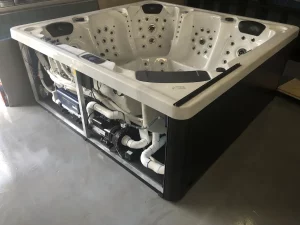
Hot tub plumbing comprises three main parts: circulation, filtration, and heating. All three are in a closed system, so the water never leaves the system, except the amount that evaporates naturally.
How is a hot tub heated within this plumbing? The heater, connected via PVC pipes, warms the water as it cycles through, answering how hot tubs heat water consistently.
1. Circulation
Circulation is the movement of water throughout the spa. It’s important because it keeps the water clean and helps prevent bacteria growth. Circulators use gravity to drain water from one side of the tub to another; this allows them to circulate water without the need for pumps.
2. Filtration
Filtration removes impurities from the water. The most commonly used filters are paper cartridge filters. Cartridge filters need to be regularly rinsed and cleaned for optimal filtration. Depending on the size of the filter, they should also be replaced periodically.
3. Heating Systems
Heaters keep the water at a constant temperature, allowing you to sit comfortably in the tub and enjoy a variety of therapeutic benefits. Spas may include electric heaters, convection heaters, or solar panels.
Now let’s look at some of the individual parts of the system to show you how they work together in more detail.
4. Suction Line
The suction line attaches to the pump. It draws water from the hot tub through the skimmer filter and floor drain. A pipe attached to these points joins into one line that goes into the pump where the water starts its journey through the system.
5. Pump
A pump draws the hot tub water from the suction line and sends it through the filter, heater and back into the water jet array. The power of the pump is important, but it can be a vanity point. Reputable dealers use hot tubs with one pump per 20-30 jets to keep the water flow high enough.
6. Filter
After the pump, the stream of water goes through the filter. The most common filter type is a cartridge filter to make replacement easier. Ceramic fiber filters may also be available.
Bacteria and other pollutants are killed by chlorine and bromine and the filter collects them, as well as any debris. Hot tub filter maintenance is the most common chore, and watching the filter for signs of wear, pollution, and debris build-up is a wise way to make the most out of your hot tub.
7. Heater
After the filter, the water passes into the heating coil. The heating method, whether electric, gas, or wood, will bring cold water into contact with a hot heating coil to produce hot water to return to the tub. The heating speed is determined by how hot the coil is compared to the water and how much heat can be transferred.
8. Ozonator (this is optional)
Ozone generators are used by some spas to help keep their pools cleaner than they would be otherwise. It will be located after the heater in the equipment cycle.
Ozone generators generate ozone gas and inject it into the water. Ozone works by removing pollutants from water through oxidation. It reduces the need for sanitizers because less chemicals are required.
You can choose between an ultraviolet (UV) ozone generator and a corona discharge (CD) ozone generator. CD is the more widely used Ozonator due to its long lifespan, high efficiency, and smaller size.
9. Return Line
The return line is the end of the filtration process. It connects the heater to the manifolds, where the returning H2O rejoins the hot tub.
10. Manifolds
The manifolds split the returning flow into streams for each of the jets or nozzles in the hot tub. Manifold sizes differ depending on how many jets and nozzles are in the design.
11. PVC Tubes
Plastic or PVC tubes connect the manifold to the nozzles. These direct the flow to all the output points. They are made from PVC to make it easy to bend around any hot tub design and reach the connections easily without strain on the pipes.
12. Jets Or Hydro Jets
Jets or nozzles are slightly more complicated than you might think. Most of them have three parts:
Water In – The connection to the filtration system.
Air In – A tiny hole is added to the jet to produce bubbly water through something known as the Venturi effect.
Output nozzle – Once the air is added, the stream of bubbly H2O is sent into the hot tub.
Many jets have a simple twist control system to adjust the flow speed individually.
How Hot Tubs Work: FAQ
How do hot tubs heat up?
A pump draws water from the tub through a suction line, passes it through the filter, and pushes it into the heater, where a hot heating coil warms the water before it returns through the jets. The heater is usually electric or gas powered, and some custom builds burn wood. A thermostat maintains your set temperature and insulation keeps the heat in, which is also how hot tubs stay hot between soaks.
How are hot tubs powered?
Most hot tubs are powered by electricity, drawing 13-32 amps, while others run on gas such as propane, and some custom builds use wood as a fuel source. Before installation, have a licensed electrician confirm your home’s electrical capacity.
Do hot tubs require plumbing?
No. A standard hot tub is fully self-contained: circulation, filtration, and heating all happen inside a closed loop, so the water never leaves the system except what evaporates naturally. There is no permanent connection to your home’s plumbing; you simply fill the tub, then drain and refill it periodically.
How do hot tub jets work?
Most jets have three parts: a water inlet connected to the filtration system, a tiny air hole that mixes bubbles into the stream through the Venturi effect, and an output nozzle that sends the bubbly water into the tub. Many jets also have a simple twist control so you can adjust the flow speed individually.
Is a jacuzzi different from a hot tub?
Not really. Jacuzzi is a brand name, and the terms are often used interchangeably. Both rely on the same closed-loop principle: a pump circulates water through a filter and heater, then returns it to the tub through the jets.
How do you work a hot tub’s controls?
Nearly all hot tubs have two main controls, temperature and flow rate, and newer spas add controls for bubbles, lights, and music. Topside controls are located on the body of the hot tub so you can reach them while soaking, while spa-side controls sit near the pumps and heating element and often come with a remote.
Contact Epic Hot Tubs to Learn More About Hot Tubs Today!
Now that you know a bit more about how a hot tub works, you can make better decisions about the best hot tub for your home. For example, knowing a hot tub might need multiple pumps to power a high number of nozzles, look for a model that offers this feature. Choose wisely, and you will enjoy the benefits of a hot tub in your backyard for years to come.
Epic Hot Tubs is a locally owned and operated hot tub company serving Raleigh and the surrounding area. Please feel free to contact us at 888-884-3742 for any inquiries or any general questions.
Have questions, or want to see options in person? Stop by any of our five North Carolina showrooms and talk it through with our team: Raleigh, Durham, Sanford, Charlotte, or North Charlotte. We are open 7 days a week, no appointment needed.

About The Author:
Richard Horvath
Hot Tub & Spa Expert
Richard has been in the hot tub & spa industry for years. As a long hot tub & swim spa owner himself, Richard has a passion for helping homeowners create their dream backyard, helping over one thousand North Carolina homeowners achieve that dream in the process.


