
When it comes to hot tubs, there are a lot of opinions out there. We're…

Common Hot Tub Issues That Ruin Heat Therapy Benefits
Hot tub not delivering results? These 5 common issues quietly kill heat therapy benefits, and here’s how to fix each one.
TL;DR: Hot tub heat therapy delivers real, research-backed results, including improved circulation, joint relief, muscle recovery, and immune system support. But several common problems quietly undermine every soak: wrong water temperature, weak jets from mineral buildup, off-balance water chemistry, bacterial contamination, and heat loss from poor insulation. This guide covers each issue and how to fix it so your tub actually delivers the therapy it promises.
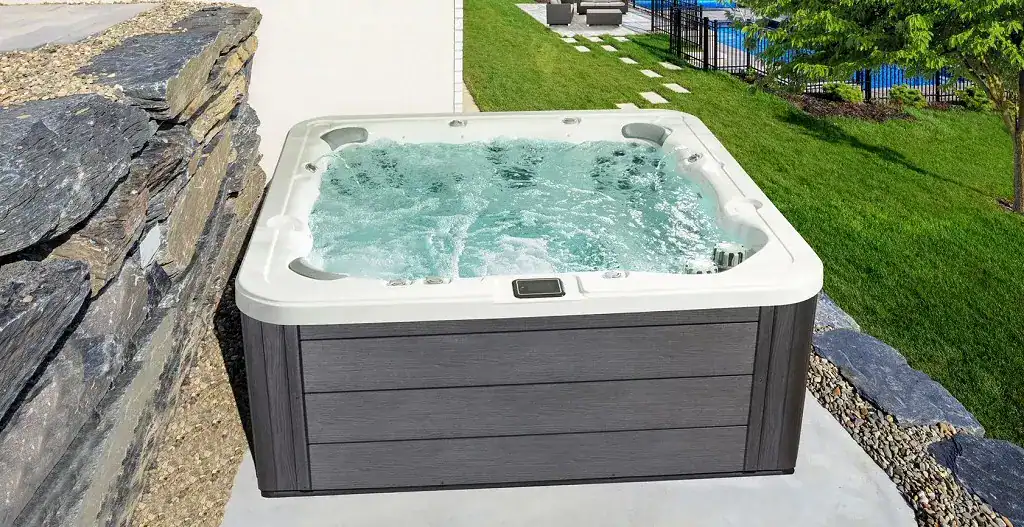
You bought your hot tub for a reason. Maybe it was the sore muscles after work, the stiff joints every morning, or just a way to decompress that actually works. Most owners don’t realize: a hot tub that feels warm and has running jets isn’t automatically giving you heat therapy. The conditions have to be right.
Below are the most common issues that quietly sabotage your sessions, and what to do about each one.
Table of Contents
Show
What Does Heat Therapy in a Hot Tub Actually Do?
Hot tub heat therapy works by raising your core body temperature, which causes blood vessels to dilate, increases circulation, relaxes muscle tension, and stimulates your immune response. In controlled research, properly maintained hot water immersion consistently outperforms dry heat at producing these effects.
The warm water surrounds your entire body. That full-body immersion prevents you from cooling off through sweat the way you would in a sauna. Hot water immersion produces stronger changes in circulatory and immune markers than other heat therapy methods precisely because of this. In a 2025 trial at the University of Oregon, 45 minutes in 40.5°C water raised core temperature by 1.1°C against 0.4°C for a traditional sauna, and immersion was the only method that raised interleukin-6, natural killer cells and CD8+ T cells in the days afterward. Understanding the full range of hydrotherapy benefits also makes it clearer why small tub problems have a bigger impact than most owners expect.
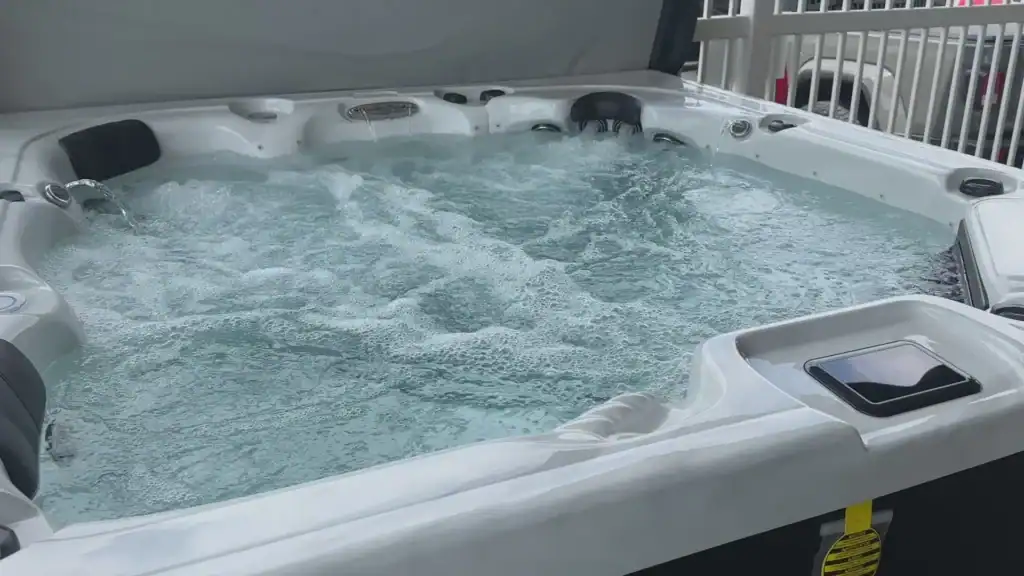
Does Wrong Water Temperature Kill the Therapeutic Effect?
Yes. Water that’s too cool won’t raise your core temperature enough to trigger the physiological benefits of heat therapy. Water that’s too hot puts your cardiovascular system under excessive stress. The sweet spot for most adults is 98°F to 104°F, with shorter sessions recommended at the higher end.
For specific goals, the range narrows further. The Arthritis Foundation recommends 92°F to 100°F for joint therapy since higher temperatures can increase inflammation in some people. Medical News Today notes that water in the 98°F to 104°F range helps loosen tight muscles and reduce joint stiffness for both arthritis management and post-workout recovery. If your tub isn’t hitting the right temperature, or it’s fluctuating more than a degree or two during a session, you’re losing most of the benefit.
Signs Your Heater Is Failing
A struggling heater usually gives warning signs before it stops working. Watch for water taking longer than usual to reach your set temperature, the temperature not staying consistent between sessions, error codes on the control panel, your electricity bill creeping up without any change in usage, or strange noises from the equipment bay.
Heater repair typically runs $200 to $700, and full replacement can reach $2,000 depending on the model. If you’re seeing multiple warning signs, get a repair assessment early before a partial failure becomes a full one.
When Your Tub Quietly Overheats
Thermal creep happens when your tub climbs a degree or two above your set point over time, usually from a faulty thermostat or high-limit switch. You might not feel the difference immediately, but sessions above 106°F carry real cardiovascular risks. Temperature fluctuations greater than a couple of degrees signal a flow or thermostat problem worth addressing sooner rather than later.
| Therapy Goal | Recommended Temp | Max Session Length |
| General relaxation | 100°F to 104°F | 20 minutes |
| Arthritis and joint relief | 92°F to 100°F | 20 minutes |
| Muscle recovery | 100°F to 104°F | 15 to 20 minutes |
| Post-workout cooldown | 95°F to 100°F | 15 minutes |
| Passive cardiovascular support | 100°F to 104°F | 15 minutes |
Both muscle recovery and arthritis relief have specific temperature considerations worth knowing before your next soak.
Expert Tip: At Epic Hot Tubs, one of the most common service calls we get is for a tub that heats fine but can’t hold its temperature between sessions. Owners think it’s working, but by the time they get in, the water is already 3 or 4 degrees below where it needs to be. If your tub runs a long time just to recover temp, our technicians almost always check the thermostat and high-limit switch first, before touching the heater. It’s a cheaper fix than most people expect, and it solves the problem more often than not.
How Clogged Jets Hollow Out the Hydrotherapy Effect
Yes. The jets in your hot tub don’t just add bubbles. They deliver targeted water pressure to specific muscle groups. That pressure is what produces the massage-like effect that amplifies the benefits of warm water. When jets are blocked or weak, you’re left with warm water and very little else.
Mineral scaling from calcium buildup is the most common culprit. It blocks nozzles, restricts flow through the plumbing, and forces the pump to work harder. The result is weaker pressure, uneven jet output, and in some cases a pins-and-needles sensation instead of a proper massage.
How to Spot and Fix Mineral Buildup
Look for white or grey deposits around the jets and the waterline. If some jets feel noticeably weaker than others, or a few have stopped rotating, mineral buildup is likely the cause.
For surface deposits, a soft cloth with white vinegar handles most of it. For internal scaling in the pipes, a line flush cleaner run through the system with jets on high for 15 to 30 minutes clears the buildup from inside out. Calcium hardness should stay between 150 and 250 ppm to prevent it from coming back.
Keeping Your Filter in the Picture
Cleaning your hot tub filter matters here too. A clogged filter restricts flow across the whole system, which lowers jet pressure and forces the heater to work harder. Rinse the filter every two weeks, deep clean it monthly, and replace it every 12 to 18 months.
Does Water Chemistry Imbalance Cancel Out the Benefits?
Off-balance water chemistry doesn’t just affect water quality. It affects you directly. When pH or sanitizer levels fall outside the correct range, soaking can cause skin irritation, eye burning, and respiratory discomfort. At that point, you’re not getting therapy. You’re getting the opposite.
The correct ranges are straightforward: pH should stay between 7.2 and 7.8, chlorine between 2 and 4 ppm, and alkalinity between 80 and 120 ppm. When pH drops below 7.2, the water becomes acidic and strips the natural oils from your skin. When it climbs above 7.8, chlorine loses much of its sanitizing power, which feeds directly into bacterial problems.
What Off-Balance Water Does to Your Body
High pH makes water feel slippery and can cause rashes and skin irritation after soaking. Low pH causes burning sensations in the eyes and on the skin. Both make the session unpleasant and work against recovery.
If you come out of a soak with red, itchy skin, water chemistry is usually the first thing to check. Not the jets, not the heat.
The Testing Routine That Keeps It Right
Test your water before you get in, not after. Testing your hot tub water twice a week keeps pH and sanitizer in range before problems develop. Monthly calcium hardness and total dissolved solids testing catches the slower-moving issues that weekly strips won’t pick up.
Expert Tip: The number one thing our water care team at Epic Hot Tubs tells new owners is to test before you get in, not after you notice a problem. By then, the balance is already off and you’ve had one or more sessions in water that wasn’t doing you any good. Keep test strips right next to the tub. Testing before you get in, especially after heavy use or heavy rain, takes 30 seconds and removes all the guesswork.
Bacterial Contamination: When the Water Itself Becomes the Risk
Hot tub water is warm, aerated, and shared by multiple people. That combination creates ideal conditions for bacteria to multiply, especially when sanitizer levels drop even briefly. Getting into contaminated water doesn’t just cancel the therapeutic benefits. It can actively cause harm.
The CDC notes that germs in hot tub water can cause respiratory illness, skin infections, and gastrointestinal problems through skin contact, inhalation of aerosols, or accidental swallowing.
The Most Common Bacterial Threats
Hot tub rash is caused by Pseudomonas aeruginosa, a bacteria that thrives in warm, under-sanitized water. It produces itchy red bumps or blisters, especially where swimwear covers the skin. A peer-reviewed study of swimming pools and hot tubs found that 96% of Pseudomonas isolates were multidrug resistant, meaning the infection can be difficult to treat once established.
Legionella is the other serious risk. Legionella pneumophila in contaminated water can cause Legionnaires’ disease, a serious lung infection that is particularly dangerous for people over 50, former smokers, and anyone with a weakened immune system.
What Proper Sanitization Actually Looks Like
| Water Problem | Symptom You’ll Notice | Fix |
| Low chlorine or bromine | Cloudy water, strong odor, skin irritation | Shock the tub, rebalance sanitizer levels |
| High pH | Slimy water feel, reduced sanitizer effectiveness | Add pH decreaser, retest after 30 minutes |
| Low pH | Burning eyes and skin during or after soaking | Add pH increaser or alkalinity booster |
| Pseudomonas bacteria | Red itchy rash, especially under swimwear | Drain and disinfect, recheck sanitizer |
| Legionella risk | Flu-like symptoms after soaking | Maintain 3 to 5 ppm chlorine, shock regularly |
Your hot tub sanitizer guide has everything you need to pick the right product and keep levels consistent between soaks.
Does Poor Insulation Prevent the Tub From Reaching Therapeutic Temperature?
Yes. Even a well-functioning heater struggles to deliver consistent heat therapy if the tub loses heat faster than it can replace it. Evaporation from the water surface is the biggest factor, and a damaged or ill-fitting cover makes it worse.
Poor insulation means the heater runs constantly, struggles to reach your target temperature, and burns through electricity in the process. The water might get close to 100°F during a session but cools faster between uses, leading to inconsistent starting temperatures and longer heat-up times.
What to Check First
Start with the cover. A waterlogged, cracked, or warped cover loses its insulating ability and lets heat escape around the edges. If your cover is noticeably heavy and sagging in the middle, it has absorbed water and needs replacing. Check the foam core and the seal around the lip.
Then look at placement. A tub in a wind-exposed area loses surface heat rapidly. A windbreak, fence, or sheltered corner makes a measurable difference in how efficiently it holds temperature between sessions.
Expert Tip: Here’s a field check our Epic Hot Tubs service team uses when inspecting a tub for heat loss: run your hand along the outside cabinet panels after the tub has been running for a while. If the panels feel noticeably warm, heat is escaping through the cabinet insulation. A well-insulated tub should feel close to ambient temperature on the outside, even when the water inside is at 104°F. This one check takes five seconds and tells you more about your tub’s efficiency than most diagnostic readouts will.
How to Keep Your Hot Tub in True Therapy-Ready Shape
Keeping your hot tub working as a genuine therapy tool comes down to a few consistent habits.
- Test your water at least twice a week.
- Rinse the filter every two weeks, deep clean it monthly, and replace it every 12 to 18 months.
- Inspect the cover monthly for cracks or water absorption.
- Check the jets every few months for calcium buildup or pressure loss.
- Watch for early heater warning signs: slow heating, inconsistent temps, and unusual sounds.
When something feels off, getting a professional assessment early costs a lot less than waiting for a full breakdown. Bronson Health highlights that the health benefits of regular hot tub use, including cardiovascular support and anti-inflammatory effects, are well-documented. But they depend on a tub that’s clean, properly heated, and maintained on a real schedule.
If you’re in North Carolina and want someone to take a look, Epic Hot Tubs offers repair and water care services across the state. Our team can assess your heater, test your water chemistry, and help you get back to sessions that actually work.
Conclusion
Your hot tub is one of the better investments you can make in day-to-day recovery and wellness. But it only earns that label when the conditions are right.
Wrong temperature, weak jets, off-balance water, or a failing cover all work against you, even when the tub looks and feels fine on the surface. Fixing these issues isn’t complicated, but it does require a regular routine and knowing what to look for.
Start with the basics: test your water, check your filter, and keep an eye on your heater. If you’re not sure where your tub stands, reach out to the Epic Hot Tubs team for a water test or service call. We’ll help make sure every soak is actually doing what it’s supposed to.
Frequently Asked Questions
What is the best hot tub temperature for heat therapy?
For most adults, 100°F to 104°F works well for general relaxation and passive heat therapy. If you’re targeting joint pain or arthritis, the Arthritis Foundation recommends 92°F to 100°F to avoid cardiovascular strain. Keep sessions to 15 to 20 minutes regardless of temperature, and step out if you feel lightheaded or overheated.
How do I know if my hot tub jets are working properly?
Strong jets produce firm, consistent pressure from each nozzle. If some jets feel noticeably weaker than others, or if you see white buildup around the jet face, calcium scaling is likely blocking the flow. A line flush treatment followed by filter cleaning will usually restore performance. If individual jets still feel off after that, they may need to be replaced.
Can poor water chemistry cancel out heat therapy benefits?
Yes. When pH falls below 7.2 or rises above 7.8, it causes skin and eye irritation that makes soaking uncomfortable and potentially harmful. High pH also reduces how effective your sanitizer is, which raises bacterial risk. You can soak in warm water every day, but if the chemistry is off, you’re not getting therapy. You’re just getting exposure.
How often should I test my hot tub water?
At minimum, twice a week for pH, alkalinity, and sanitizer levels. After heavy use, a large group soak, or rainfall, test before the next session. Monthly testing for calcium hardness and total dissolved solids catches the slower-moving issues that weekly test strips don’t always flag early enough. Call a professional for anything involving the heater, pump, or electrical components. DIY work on these systems can void your warranty, create safety risks, or turn a $300 repair into a $1,500 one. Water chemistry, filter rinsing, and surface cleaning are reasonable DIY tasks. Mechanical and electrical failures are not.
Have questions, or want to see options in person? Stop by any of our five North Carolina showrooms and talk it through with our team: Raleigh, Durham, Sanford, Charlotte, or North Charlotte. We are open 7 days a week, no appointment needed.

About The Author:
Richard Horvath
Hot Tub & Spa Expert
Richard has been in the hot tub & spa industry for years. As a long hot tub & swim spa owner himself, Richard has a passion for helping homeowners create their dream backyard, helping over one thousand North Carolina homeowners achieve that dream in the process.


