
Home saunas are an amazing addition to any home, but what does one cost? Learn…

7 Cheap Infrared Sauna Pitfalls: Health Risks and Hidden Costs
Discover how bargain models can expose you to uneven heat, high EMR, and surprise repair bills.
Ever dreamed of unwinding in your very own infrared sauna after a long day? The allure of affordable models of these saunas can be tempting when you’re on the hunt—after all, who doesn’t love a bargain? But there is a catch: those budget-friendly options often hide serious problems that might cost you more than just money in the long run.
In this article, we’ll cover:
- Why those “amazing deals” on infrared saunas might not be so amazing after all
- The hidden health hazards lurking in cheaply made models
- How to spot the difference between a genuine value and a dangerous money pit
Don’t gamble with your health or wallet! By the end of this read, you’ll be equipped to make smarter choices that serve your wellness goals without compromising safety. Grab a cup of tea and let’s get into the nitty-gritty of what makes some infrared saunas a dangerous investment.
Table of Contents
Show
The Warm Glow of False Economy: Understanding Infrared Technology
Before diving into the pitfalls, let’s get clear on what we’re dealing with. Understanding the differences between infrared vs traditional sauna technologies is the first step toward making an informed decision.
Infrared saunas use special heaters that emit invisible light waves to warm your body directly, rather than just heating the air around you like traditional saunas do. It’s this direct warming that creates those wonderful benefits everyone raves about—detoxification, muscle recovery, better circulation, and that delicious relaxation.
But here’s where things get tricky. The quality of those infrared heaters—their construction, materials, and technology—makes all the difference between a therapeutic experience and a potentially harmful one. “Budget” infrared saunas cut corners in ways that aren’t immediately obvious. You know how sometimes a great sale seems too good to be true? With home infrared sauna models priced significantly below market average, it usually is. Manufacturers slash costs by using inferior heating elements, thinner woods, toxic adhesives, and minimal safety features.
Think of it like buying a cheap knockoff of a high-end kitchen knife. It might look similar at first glance, but start cooking with it regularly, and you’ll quickly feel the difference—except with saunas, the consequences go beyond frustration and into dangerous territory.
True Cost vs. Sticker Price
When comparing prices, many first-time buyers focus exclusively on the upfront cost. A $1,200 far infrared sauna seems like a steal compared to a $3,500 model—until you factor in electricity bills, repair costs, shortened lifespan, and potential health impacts. Understanding how much does a home sauna cost in terms of the complete investment is crucial for making a wise decision.
Quality saunas from respected manufacturers like Finnleo are built to last 15-20 years with minimal maintenance. Meanwhile, many budget models start developing problems within 2-3 years—if not sooner. Do the math, and suddenly that “bargain” doesn’t look so appealing.
Pitfall #1: Dangerous EMF Radiation Exposure
Let’s talk about something you might not see on the sales page of cheap saunas: electromagnetic field (EMF) radiation.
EMF radiation is a form of energy that’s emitted by electronic devices—including the heating elements in your infrared sauna. While we’re exposed to low levels of EMF in everyday life, prolonged exposure to high levels raises serious health concerns, including potential links to cellular stress, genetic damage, and increased cancer risk.
The Silent Health Threat in Bargain Models
In quality low EMF saunas, manufacturers invest in specialized shielding and heater designs that keep EMF exposure well below 3 milligauss (mG) when measured at body distance. Many premium models even achieve levels below 1 mG.
Contrast that with cheap saunas where EMF levels can soar to 20-80 mG or higher! That’s up to 25 times the recommended safe level. Why? Because proper EMF mitigation technology costs money—money that budget manufacturers aren’t willing to spend. That means inexpensive infrared saunas often skate by with minimal or no EMF shielding whatsoever.
A friend of mine purchased a $1,200 infrared sauna online and was thrilled with the price—until she bought an EMF meter and discovered readings of over 50 mG right where she sat. “I basically paid to sit inside an electromagnetic field,” she told me. “I was trying to improve my health, not damage it.”
What EMF Levels Should You Accept?
Health experts generally recommend keeping EMF exposure below 3 mG during sauna sessions. When shopping, look for models that explicitly state their EMF testing results—and be wary of vague claims like “low EMF” without specific numbers.
Remember, legitimate manufacturers will have their EMF levels tested by independent third parties and will happily share detailed reports, not just marketing claims.
Pitfall #2: Hot and Cold Nightmares – Uneven Heating Problems
Have you ever had that uncomfortable shower experience where the water keeps fluctuating between scalding and freezing? That’s essentially what happens in poorly designed infrared saunas, except you’re sitting in it for 30+ minutes.
The Carbon vs. Ceramic Heating Debate
Quality infrared saunas use carefully engineered carbon-ceramic composite heaters or premium carbon panels that distribute heat evenly throughout the sauna room. These heaters operate at the optimal infrared wavelength (around 9.4 microns) to penetrate tissue effectively.
Bargain saunas? They typically use thin, cheaply made carbon panels that create significant hot and cold spots. You’ll find yourself constantly shifting positions, trying to find that elusive “just right” spot that doesn’t exist.
Beyond Comfort: The Health Implications
Uneven heating isn’t just annoying—it actually undermines the therapeutic benefits you bought the sauna for in the first place. Areas receiving insufficient infrared light exposure won’t experience the same circulation boost, muscle relaxation, or detoxification effects. When comparing wellness options, many people weigh the sauna vs hot tub health benefits, but neither will deliver results if poorly constructed.
Even worse, hot spots can cause skin irritation or even minor burns in extreme cases. Meanwhile, cold spots leave you shivering instead of relaxing, defeating the entire purpose of your infrared sauna therapy session.
One customer described her experience with a budget model: “It was like sitting with one side of my body next to a heater and the other in a drafty room. I’d end up with one arm sweating and the other one cold. How is that supposed to be relaxing?”
Pitfall #3: Toxic Materials That Turn Wellness Into Illness
You buy an infrared sauna to detoxify your body, only to expose yourself to a new set of toxins from the sauna itself. Isn’t it ironic? This happens more often than you might think with cheap models.
The Hidden Chemical Cocktail
Low-quality saunas often use:
- Chemically treated woods that haven’t been properly cured
- Toxic glues and adhesives that off-gas when heated
- Low-grade electrical components with flame retardants
- Paint and finishes containing volatile organic compounds (VOCs)
When these materials heat up during your sauna sessions, they release their chemical compounds into the air you’re breathing. Talk about counterproductive!
The Wood Quality Factor
Premium infrared saunas use specific woods chosen for their low toxicity, durability under heat, and minimal off-gassing. Canadian Hemlock, Western Red Cedar, and Nordic White Spruce are popular choices for quality models like those from Finnleo.
Bargain manufacturers, however, often use whatever wood is cheapest—sometimes even pressure-treated lumber or engineered wood products containing formaldehyde-based glues. These materials can release harmful chemicals when heated repeatedly.
Construction Shortcuts That Compromise Safety
Beyond materials, cheap saunas cut corners on basic structural integrity. Thin walls, flimsy benches that wobble or creak, and poorly sealed joints not only feel unsafe but can create actual safety hazards over time.
“The bench in my first sauna started coming loose after just a few months,” one user reported. “I literally fell through it mid-session. Not exactly the relaxing experience I was hoping for!”
Pitfall #4: Sky-High Energy Bills From Poor Insulation
Think you’re saving money with that bargain sauna? Your electric bill might tell a different story.
The Thermal Leak Problem
Understanding how much electricity does a sauna use is crucial when evaluating the true operational costs of different models. Quality infrared saunas feature thick walls (typically 1-2 inches) with proper insulation and tight-fitting joints that keep heat where it belongs—inside the sauna room.
Budget models often use much thinner woods (sometimes as thin as 5-8mm) with minimal insulation. The result? Heat escapes constantly, forcing the heaters to work overtime and driving up your electricity costs month after month.
The Real Cost Comparison
Let’s do some simple math to determine how much does a sauna cost to run:
A well-insulated, quality infrared sauna might use around 1.5-1.8 kWh per 30-minute session. At the average U.S. electricity rate of about $0.15/kWh, that’s roughly $0.25 per session.
A poorly insulated cheap model might consume 2.5-3 kWh for the same session—costing around $0.45 each time.
That $0.20 difference doesn’t sound like much until you calculate it over time:
- Using your sauna 3 times weekly = $31.20 more per year
- Over a 10-year period = $312 in wasted energy costs
Plus, the constant strain on cheap heating elements leads to earlier failure, adding repair costs to the equation.
The Environmental Impact
Beyond your wallet, inefficient saunas have a larger carbon footprint. In an age where we’re all trying to reduce energy consumption, choosing an efficient home infrared sauna is both economically and environmentally responsible.
Pitfall #5: The Repair-Replace-Repeat Cycle
There’s nothing more frustrating than investing in wellness equipment that breaks down right when you’ve made it part of your routine. Yet this is the common fate of cheap infrared sauna owners.
Common Failure Points in Budget Models
Inexpensive infrared saunas typically fail at predictable points:
- Heating elements burning out prematurely
- Control panels malfunctioning
- Door hinges breaking
- Interior light fixtures shorting out
- Bench supports weakening
These issues usually begin appearing 12-24 months after purchase—conveniently just after many limited warranties expire.
The Warranty Gotcha
Speaking of warranties, this is where budget manufacturers really show their true colors. While quality manufacturers offer comprehensive 5-7 year warranties covering all components, bargain brands typically offer:
- 1-year “limited” warranties with numerous exclusions
- Parts-only coverage (you pay for labor)
- Warranties that don’t cover shipping costs for replacement parts
- Customer service that’s nearly impossible to reach
One customer shared: “When my control panel died, I spent weeks trying to reach customer service. When I finally got through, they told me I’d need to pay $120 for the new part plus $75 shipping from China. And install it myself. Some warranty!”
The Long-Term Value Equation
Quality infrared saunas like those from Finnleo typically last 15-20 years with minimal repairs needed. Even if a component does fail, replacement parts are readily available, and service networks exist to handle repairs professionally.
When you break down the cost over the full lifespan, a $3,500 quality sauna used for 15 years costs about $233 per year. Compare that to a $1,500 budget model that needs replacement after 5 years—that’s $300 per year, and with far more headaches along the way.
Pitfall #6: Underpowered and Underwhelming Performance
Have you ever waited… and waited… and waited for a cheap sauna to heat up? Underpowered heating systems are another hallmark of budget infrared saunas, and they significantly diminish the experience.
The Never-Ending Preheat
Quality infrared saunas reach optimal temperature within 15-20 minutes. Bargain models often require 30-45 minutes or more—if they ever reach the claimed temperature at all.
This extended warm-up doesn’t just test your patience; it wastes electricity and reduces the likelihood you’ll actually use the sauna regularly. After all, who wants to plan nearly an hour ahead for a 30-minute sauna session?
Temperature Limitations and Therapeutic Impact
Many budget infrared saunas struggle to reach temperatures above 120°F, regardless of what the control panel claims. This temperature limitation significantly reduces therapeutic benefits, especially for deep tissue relief and maximum detoxification, which typically require temperatures of 130-140°F.
“I set my sauna to 140 degrees, but my separate thermometer never showed it getting above 115,” one disappointed owner reported. “It’s like buying a car advertised to go 120 mph that maxes out at 70.”
Power Rating vs. Reality
Be skeptical of manufacturers that advertise high wattage but deliver underwhelming heat. Some budget saunas boast impressive power ratings on paper but use such inefficient heaters that much of that energy converts to wasted electricity rather than effective infrared output.
Quality matters more than raw power numbers—proper heater design, optimal infrared wavelength, and effective heat distribution make a bigger difference than just the wattage rating.
Pitfall #7: Near-Infrared Hazards in Poorly Designed Models
Not all infrared light is created equal, and this is where some of the most serious health risks of cheap saunas lurk.
Understanding the Infrared Spectrum
Infrared radiation spans three categories:
- Near-infrared (NIR): Shortest wavelength, highest energy
- Mid-infrared (MIR): Medium wavelength and energy
- Far-infrared (FIR): Longest wavelength, gentlest energy
Understanding the differences between full-spectrum vs far-infrared sauna technologies is crucial for making an informed choice. Quality far-infrared saunas focus primarily on far-infrared, which penetrates tissues effectively while being gentle and safe.
Some premium “full-spectrum infrared sauna” models incorporate carefully controlled amounts of mid and near-infrared for additional therapeutic benefits.
The Near-Infrared Danger Zone
Poorly designed cheap near-infrared sauna models often emit uncontrolled or excessive near-infrared radiation, which can potentially:
- Damage skin cells and accelerate skin aging
- Contribute to cataract formation with extended exposure
- Create excessive oxidative stress in exposed tissues
- Potentially increase skin cancer risk when combined with UV damage
One study published in the Journal of Investigative Dermatology found that near-infrared radiation activates the same skin-aging pathways as ultraviolet light, potentially accelerating photoaging processes.
The Safeguards Missing in Budget Models
Quality manufacturers carefully engineer their heaters to control infrared wavelengths or incorporate protective filters that block harmful portions of the spectrum. These safeguards are almost universally absent in bargain saunas.
“My dermatologist noticed unusual sun damage patterns on my skin,” shared one user of a cheap full-spectrum sauna. “When I mentioned my new sauna routine, she immediately suggested having the near-infrared output tested. Turns out it was emitting far more than safe levels.”
Making Smarter Choices: What to Look for Instead
After all these warnings, you might be wondering if there’s any safe way to enjoy infrared sauna therapy without breaking the bank. Good news—there is!
Essential Features Worth the Investment
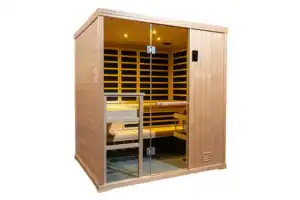
While you don’t need to buy the most expensive model on the market, certain features should never be compromised. Browse our selection of quality infrared saunas to see what features are most important, including:
- Verified low EMF levels (under 3 mG)
- Quality wood construction (at least 1″ thick)
- Non-toxic materials certification
- Even heat distribution technology
- Comprehensive warranty (minimum 5 years)
- Established manufacturer with service support
Reputable manufacturers like Finnleo build models across various price points while maintaining essential safety standards in all their saunas.
Red Flags That Should Send You Running
Be extremely cautious of saunas that:
- Don’t specify exact EMF levels
- Use thin wood panels (under 8mm)
- Have flimsy bench construction
- Offer warranties under 2 years
- Come from brands with no history or physical address
- Make claims about effectiveness without supporting evidence
The Value of Buying from Established Dealers
Working with reputable dealers like Epic Hot Tubs gives you significant advantages:
- Expert guidance in selecting the right model
- Professional installation options
- Local service support when needed
- Accountability that online-only sellers can’t match
Plus, established dealers often offer financing options that make quality saunas more affordable than you might think.
| Feature | Budget Sauna ($1,000-$1,500) | Mid-Range Quality ($2,500-$3,500) | Premium ($4,000+) |
| EMF Levels | 20-80+ mG | 3-10 mG | <1-3 mG |
| Wood Thickness | 5-8mm | 8-15mm | 15mm+ |
| Heater Technology | Basic carbon | Carbon-ceramic hybrid | Full-spectrum or advanced carbon-ceramic |
| Heat-Up Time | 30-45+ minutes | 15-25 minutes | 10-20 minutes |
| Warranty | 1 year limited | 5-7 years | 7+ years comprehensive |
| Expected Lifespan | 2-5 years | 7-12 years | 15-20+ years |
| Monthly Energy Cost* | $25-40 | $15-25 | $10-20 |
*Based on 3-4 sessions per week at average U.S. electricity rates
The Bottom Line: Invest in Your Health, Not in Problems
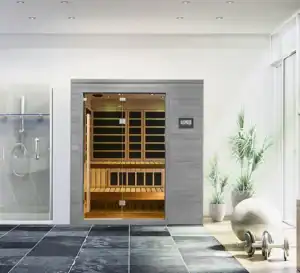
When it comes to infrared saunas, the old saying rings true: “The bitterness of poor quality remains long after the sweetness of low price is forgotten.” An infrared sauna should be a sanctuary that supports your health journey—not a source of bitterness borne from new problems. By investing in a quality model from a reputable manufacturer like Finnleo, you’re not just buying a wellness product; you’re investing in peace of mind.
Remember, this is a device you’ll sit inside regularly, exposing your body to heat and infrared light for extended periods. Is that really an area where cutting corners makes sense?
Whether you choose a compact 1-person model or a spacious family-sized cabin, prioritize safety, efficiency, and durability. Your body—and your future self—will thank you.
Ready to explore quality infrared sauna options? Visit Epic Hot Tubs to experience the difference proper engineering and materials make in both performance and safety. Your journey to better wellness deserves the right foundation.
Frequently Asked Questions
How much more expensive are quality infrared saunas compared to budget models?
Quality infrared saunas typically start around $2,500-$3,000 for a one-person model, while budget versions can be found for $1,000-$1,500. However, when you factor in longer lifespan (15+ years vs. 2-5 years), lower energy costs, fewer repairs, and the health benefits of safer materials, quality models often cost less over their lifetime. Think of it as paying $200-300 per year for a quality sauna versus $300-500 per year for a budget model that delivers inferior results.
How can I test EMF levels if I already own an infrared sauna?
You can purchase an EMF meter online for $30-150. For accurate readings, take measurements at various points where your body typically rests during sessions, especially near the heating elements. Readings should ideally be below 3 mG at body distance.
If you find high readings (20+ mG), consider limiting session duration, sitting farther from heaters, or eventually upgrading to a lower-EMF model to reduce long-term exposure risks.
Can I upgrade certain components of a cheap infrared sauna to make it safer?
Unfortunately, most critical safety issues in budget saunas—like high EMF, poor insulation, and toxic materials—cannot be easily retrofitted. While you might be able to replace control panels or add external insulation, the fundamental heating system and construction materials typically cannot be upgraded cost-effectively. In most cases, it’s more practical to sell a problematic sauna and invest in a quality replacement rather than attempting major modifications.
How do I know if my infrared sauna is causing me health problems?
Watch for symptoms that appear during or shortly after sauna sessions, such as unusual headaches, skin irritation, eye discomfort, dizziness, or pronounced fatigue. If these occur consistently with sauna use and improve when you take a break from sessions, your sauna might be the cause.
Consider having the sauna tested for EMF levels and VOC emissions, and consult with a healthcare provider about your symptoms, especially if you have pre-existing health conditions.
What’s the difference between far-infrared and full-spectrum saunas?
Far-infrared saunas emit longer wavelength infrared radiation (6-12 microns) that penetrates deeply into tissues with minimal risk. Full-spectrum models include near-infrared (0.8-1.5 microns) and mid-infrared (1.5-5.6 microns) wavelengths in addition to far-infrared.
Quality full-spectrum saunas carefully control these additional wavelengths to provide enhanced benefits without harm. However, poorly designed full-spectrum models may emit excessive or uncontrolled near-infrared radiation, potentially causing skin and eye damage over time.
Are cheap infrared saunas worth it?
Simply put, no. Cheap infrared saunas are classic examples of “penny-wise, pound-foolish” purchases. While you might save $1,000-2,000 upfront, you’ll likely face higher electricity bills, frequent repairs, potentially harmful EMF exposure, and a significantly shorter lifespan (typically 2-5 years versus 15+ years for quality models).
Add in potential health risks from poor materials and uneven heating, and that “bargain” becomes an expensive mistake. If the budget is tight, consider financing a quality model or look for factory-certified refurbished units from reputable dealers.
When Should You Avoid Infrared Saunas?
Infrared saunas aren’t for everyone. Skip sauna sessions if you’re pregnant, have severe cardiovascular conditions (uncontrolled hypertension, recent heart attack, unstable angina), have a fever, or are under the influence of alcohol or drugs. Those with implanted medical devices should consult their doctors first, as some pacemakers and insulin pumps can be affected by heat.
If you have conditions like multiple sclerosis, hemophilia, or certain skin disorders, infrared heat may worsen your symptoms. When in doubt, always check with your healthcare provider before starting a sauna regimen.
Why do I feel sick after infrared sauna?
Feeling unwell after a sauna session usually signals dehydration, overheating, or detoxification reactions. First-timers often push too hard—staying too long or setting temperatures too high.
Start with short 10-15 minute sessions at moderate temperatures and gradually increase as your body adapts. Drink plenty of water before, during, and after. Eat a small snack containing electrolytes post-session.
If nausea, dizziness, or headaches persist despite these precautions, your sauna might be emitting excessive EMF or VOCs, particularly if it’s a budget model. Consider testing these levels or consulting with a healthcare provider.
What are the symptoms of overheating in an infrared sauna?
Watch for dizziness, nausea, headache, rapid heartbeat, extreme thirst, confusion, or feeling faint—these are warning signs your body is overheating. Unlike traditional saunas, infrared models heat your body directly, so you might not realize you’re overheating until symptoms appear suddenly. If you experience these symptoms, exit immediately, cool down with room temperature water (avoid ice-cold), and lie down with feet slightly elevated.
Never ignore these warning signs, as prolonged overheating can lead to heat exhaustion or even heat stroke, especially in cheaper saunas with poor temperature regulation and hot spots.
Which infrared sauna has the lowest EMF?
The lowest EMF infrared saunas typically come from premium manufacturers like Clearlight, Sunlighten, and Finnleo, with readings consistently below 1 mG at bench level. Many feature specialized EMF cancellation technology, properly shielded wiring, and strategic power supply placement.
Beware of marketing claims—many budget manufacturers advertise “low EMF” without specifying actual measurements or by measuring only at unrealistic distances.
Always request third-party verified EMF testing reports measured at the bench where you’ll actually sit, not just near the heaters. Remember that proper EMF shielding requires sophisticated engineering that inevitably affects the price point.
Is a sauna the best choice for me?
That depends on your health goals, budget, and expectations around maintenance and long-term use. Saunas can be incredibly beneficial—supporting detoxification, improving circulation, relieving sore muscles, and enhancing relaxation—but only when designed and built with quality materials and technology. If you’re drawn to the convenience and potential health benefits of owning one at home, it’s worth investing in a reliable, low-EMF model made from safe, non-toxic materials.
However, saunas aren’t ideal for everyone. If you have certain medical conditions (such as cardiovascular issues, heat sensitivity, or implanted medical devices), you should consult your doctor before beginning regular sessions.
If you’re considering different sauna options, learning about the differences between a dry vs wet sauna can also help you make the best choice for your needs. Many people also combine sauna use with the health benefits of cold plunges for enhanced recovery and wellness results.
Ultimately, a sauna is the best choice for you if you’re committed to using it regularly, want to support your wellness journey, and are ready to invest in a safe, high-quality model that won’t cut corners on your health or safety.

About The Author:
Richard Horvath
Hot Tub & Spa Expert
Richard has been in the hot tub & spa industry for years. As a long hot tub & swim spa owner himself, Richard has a passion for helping homeowners create their dream backyard.


