
Discover the 3-2-1 sauna maintenance system that prevents the most common expensive repairs. Wood-specific care…

Best Wood for Sauna Construction: Compare 10+ Species & Save Money
Most builders pick wrong wood & face warping, resin issues in 5 years. Learn which species last 30+ years with minimal maintenance.
You’re standing in a showroom (or maybe scrolling through websites late at night), trying to figure out whether Western Red Cedar is worth the premium price, or if that budget-friendly Hemlock option will work just fine. Meanwhile, terms like “thermal conductivity” and “dimensional stability” are getting thrown around, and you’re wondering if any of this actually matters for your backyard sauna dreams.
The truth? It matters more than most manufacturers want to admit. According to research on sauna physics, wood in a sauna doesn’t just sit there looking pretty. It becomes an active thermal component, interacting with heat and humidity in ways that directly affect your comfort, safety, and energy bills. An interesting global statistic: roughly 90% of saunas worldwide use Nordic Spruce, but that doesn’t mean it’s your best choice.
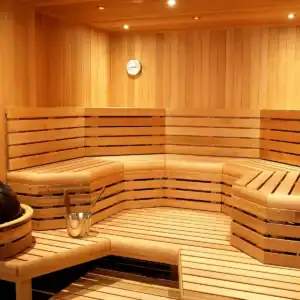
When shopping for a sauna, most people don’t realize that the wood you choose can make the difference between a $6,000 investment that lasts 30 years and one that needs major repairs in five. I’ve seen it happen more times than I’d like to count.
That’s why we’ve created this guide. Here, you’ll discover:
- How thermal conductivity affects whether you burn yourself on a bench or sink into comfortable warmth
- Why thermally modified wood offers 20-30% better insulation than traditional options (and whether that’s worth the cost)
- Which woods you should absolutely avoid, no matter how good the deal looks
Let’s cut through the marketing fluff and look at what actually works. Whether you’re building a DIY sauna or buying from a dealer like Epic Hot Tubs, understanding these materials will save you thousands in the long run.
Table of Contents
Show
Sauna wood at a glance
25–40years
well-maintained western red cedar lifespan
12%max moisture
thermowood in 100% humidity vs 40–50% untreated
160°Fand up
pine resin liquefies and can burn skin
Quick Takeaways
- Wood choice determines lifespan: Budget woods last 5-10 years while premium cedar or thermowood deliver 25-40 years, wrong choices cost thousands in early replacement.
- Thermal conductivity matters for comfort: Low-density woods like cedar stay cool to touch at 185°F (surface ~110°F), while denser woods can burn skin on contact.
- Thermowood offers 20-30% better insulation: Thermally modified woods absorb only 12% moisture even in 100% humidity vs 40-50% for untreated wood, reducing warping and maintenance by 60%.
- Never use pressure-treated lumber or high-resin pine inside: Chemicals off-gas at sauna temperatures, and pine resin liquefies above 160°F causing burns and sticky messes.
- Match wood to environment: Cedar or thermowood for outdoor/humid climates ($6,000-9,000), hemlock for indoor controlled spaces ($3,000-5,000), climate mismatches cause premature failure.
- Prioritize quality where it counts: Invest in premium wood (cedar, thermo-aspen) for benches where skin contacts directly; save money with budget options for walls and ceiling you rarely touch.
- 10-year ownership costs reveal true value: Budget spruce costs $4,500 total vs premium thermowood at $6,300, only $1,800 difference over decade when factoring maintenance and energy savings.
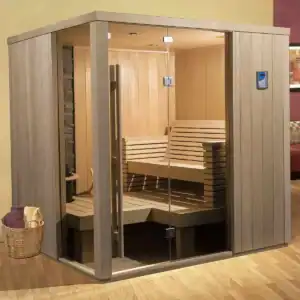
Why Wood Choice Matters More Than You Think
Walk into any hardware store and ask about sauna wood, and you’ll probably get a confident recommendation for whatever they have in stock. Pine’s cheap. Cedar smells nice. Problem solved, right?
Not quite. The wood in your sauna faces a brutal environment that would destroy most building materials in months. We’re talking 180-190°F temperatures, sudden humidity spikes when you pour water on the rocks, and then hours of cooling down afterward.
Wood used in saunas typically has a thermal conductivity around λ = 0.13 W/m/K, according to engineering studies of sauna design. But here’s where it gets interesting: not all woods perform the same. Research has established a 94% correlation between wood density and thermal conductivity. Translation? Lighter, less dense woods feel cooler to the touch even when the room is cranking at 185°F.
My friend Mike learned this lesson the expensive way. He built an outdoor sauna in North Carolina using untreated pine because it was half the cost of cedar. Looked beautiful for about eight months. Then the warping started. Then the resin began oozing out of the benches in sticky, amber puddles. By year two, mold spots appeared between the boards, and the whole interior needed replacement.
The replacement timeline tells the story. Budget woods in ideal conditions: 5-10 years. Quality wood properly matched to your climate: 20-30+ years. Do the math on that, and suddenly paying extra upfront doesn’t seem so crazy.
Key Performance Factors in Sauna Wood Selection
You know what nobody tells you when you’re picking sauna wood? There’s no such thing as “the best” wood. There’s only the best wood for your specific situation.
Thermal Conductivity and Heat Retention
The density correlation is straightforward. Lower density = better insulation = more comfortable surface = lower energy bills. Your heater doesn’t have to work as hard to maintain temperature when the walls and benches aren’t conducting heat away like crazy.
Western Red Cedar stays remarkably cool to the touch; it’s like the material has built-in climate control. Hemlock falls in the middle range, warm but not uncomfortable. Some denser hardwoods? You’d better bring a towel to sit on.
Pro Insight • Epic Hot Tubs Service Team
“Spec sheets never settle the wood question the way a hand on a bench does. Step into a heated display sauna and touch the different woods: a cedar bench feels gentle at full temperature while denser boards on the same wall feel hot. Customers who do the touch test before buying almost never second-guess their wood choice afterward.”
Moisture Resistance and Dimensional Stability
Living in North Carolina means dealing with humidity levels that swing from 45% in winter to 75% in summer. Why does that matter? Because wood moves. As humidity levels change, wood absorbs or releases moisture, causing it to expand and contract.
Cedar might expand or contract by 2-3% across its width. Lower-grade pine could see movement of 8-10% or more. Thermally modified woods have had their moisture-absorbing components literally baked out of them; they can sit in 100% humidity and max out at 12% moisture content.
Resin Content and Safety Concerns
Some woods contain high resin content. Heat those resins above 160°F, and they start liquefying and seeping to the surface. Ever touched hot pine sap? It’s sticky, it burns, and it’s nearly impossible to clean off.
Knotty pine is the worst offender. Those knots are concentrated resin pockets. Under sauna heat, they become little amber volcanoes. For benches and any surface you’ll contact directly, resin-free is non-negotiable.
Durability and Lifespan Expectations
When choosing sauna wood, longevity is just as important as looks, and different species hold up very differently depending on where and how they’re used.
Western Red Cedar consistently stands out for durability, especially in outdoor saunas. With minimal maintenance, a well-built cedar sauna can last 25–40 years. Research shows cedar contains compounds that inhibit pathogens like MRSA and various fungi, giving it an edge in moisture-rich environments.
Canadian Hemlock offers solid performance indoors, typically lasting 20–30 years when protected from the elements. Outdoors, especially in humid regions, its lifespan drops to around 10–15 years, making it better suited for interior use or well-covered exterior installations.
Nordic Spruce is the most variable of the three. Untreated spruce exposed to the weather may struggle to reach 10 years. But with thermal modification, the story changes dramatically. Thermally modified spruce becomes far more stable and rot-resistant, often lasting 20–25 years or more, even in challenging outdoor conditions.
Top 10+ Sauna Wood Species Compared
Premium Tier: Western Red Cedar
This is the wood most people picture when they think “sauna.” That rich, reddish-brown color, straight grain, and distinctive smell. Cedar comes from the Pacific Northwest, and it’s been the gold standard for good reason.
The thermal insulation properties are exceptional. Sit on a cedar bench when the sauna’s at 185°F, and the surface temperature might only be 105-110°F. The antimicrobial properties are real and research-backed, too.
The aroma, on the other hand, divides people. Some describe it as fresh, forest-like, calming. Others find it too strong. Cost is the main drawback, coming in at around 2-3x the price of budget alternatives.
Best for: Traditional sauna enthusiasts, outdoor installations, humid climates, anyone wanting a true “set it and forget it” experience.
Premium Tier: Alaskan Yellow Cedar
Think of this as Western Red Cedar’s slightly different cousin. That unique yellowish tint sets it apart visually. It thrives in wet environments even better than its red cousin. Cost-wise, it typically sits between standard cedar and true premium options.
Best for: Humid climates, outdoor saunas, installations where weight matters.
Mid-Range: Canadian Hemlock
Hemlock is the compromise choice, and I mean that in the best way possible. The light buff color with uniform texture makes any sauna look expensive, while the cost keeps most under budget: Hemlock typically runs 40-50% less than clear cedar while delivering 60-70% of the performance.
The catch? Moisture resistance lags behind cedar significantly. Hemlock works beautifully for indoor saunas or covered outdoor installations. Put it in a fully exposed outdoor sauna in North Carolina, and you’ll need to stay vigilant about maintenance.
Best for: Indoor saunas, budget-conscious buyers who won’t sacrifice too much quality, contemporary design aesthetics.
Mid-Range: Nordic Spruce
Nordic Spruce is used in 90% of saunas globally. Quality Nordic Spruce delivers roughly 90% of cedar’s performance at 60% of the cost. The appearance is pale and creamy with visible knots that add natural character.
The downside? Moisture and decay resistance aren’t great without treatment. Spruce absorbs moisture more readily than cedar.
For indoor saunas or covered installations, though, spruce is hard to beat on value.
Best for: Traditional Finnish sauna aesthetics, budget-conscious builds, indoor installations.
Budget-Friendly: Aspen
Aspen is light, almost white, giving it a clean, modern look. The standout feature? Hypoallergenic properties. No strong aromas. No oils that might trigger reactions. The smooth surface is comfortable against skin.
Durability is the compromise. Aspen doesn’t have cedar’s natural decay resistance. Figure 10-15 years with good maintenance, compared to cedar’s 25-40 years.
Best for: Allergy sufferers, infrared saunas, modern minimalist designs, people sensitive to strong wood scents.
Budget-Friendly: Basswood
Basswood is North America’s most hypoallergenic wood option. It’s lightweight, with reasonable insulation properties. Plus, zero scent means zero chance of aroma-related issues. This one works exceptionally well in infrared saunas where temperatures run 120-140°F.
Best for: Infrared saunas, people with severe allergies or sensitivities, scent-free environments.
Budget-Friendly: Pine (With Serious Cautions)
Pine is cheap and available everywhere. And honestly, It’s probably the wrong choice unless you know exactly what you’re doing. The resin content is the killer. Pine knots are concentrated resin deposits. Heat those past 160°F, and you get sticky, hot sap oozing out.
If you are using pine, it’s important to keep a few things in mind: Exterior walls only, clear grade only, proper kiln-drying verified, and accept that you’ll need to monitor for resin issues.
Best for: Tight budgets where you understand the risks, exterior framing or walls (not benches).
Alternative: Alder
Alder doesn’t get enough attention in the U.S. market. That reddish tone and pleasant texture create a warm look. Hardy and water-repellent, alder performs well in sauna conditions. Thermally modified alder has become a favorite among high-end sauna builders.
Best for: Those wanting something different from cedar/hemlock, bench materials, European sauna traditions.
Alternative: Eucalyptus (Controversial)
Eucalyptus became trendy when cedar prices spiked. The reality? Finnish sauna makers, who’ve been perfecting their craft for centuries, don’t use eucalyptus. The wood doesn’t smell like eucalyptus oil, it smells like moss and forest floor. Plus, temperature changes cause warping and cracking more commonly than with traditional sauna woods.
Best to avoid unless: You’ve personally experienced a eucalyptus sauna and love it, you’re willing to accept higher maintenance and shorter lifespan.
The Game-Changer: Thermally Modified Wood (Thermowood)
Thermally modified wood represents one of the most significant innovations in sauna construction in the past 30 years.
Wood gets placed in a specialized kiln where it’s heated to 356-482°F in an oxygen-free environment. The high heat fundamentally changes the wood’s structure. Hemicelluloses break down. Lignins crosslink and strengthen. What emerges is still wood, still natural, but with dramatically different properties.
The entire process, developed in Finland in the 1990s, uses only heat and steam. Zero chemicals. European research labs like CATAS have verified heat and sound insulation improves by up to 30% compared to untreated wood.
Performance Advantages Backed by Data
Thermowood isn’t just visually appealing, it performs differently at a fundamental level, and the numbers prove it. Its insulation value improves by 20–30% compared to untreated wood, thanks in part to its low thermal conductivity; Lunawood’s thermally modified boards measure just 0.09 W/(m·K).
Moisture behavior is where the transformation becomes even more noticeable. Even when placed in 100% humidity, thermowood stabilizes at around 12% moisture content, while untreated wood can climb to 40–50%. This stability means the material expands and contracts about 60% less during temperature and humidity swings, keeping sauna walls straighter, tighter, and quieter over time.
The heat treatment also eliminates resin at a molecular level, so you never have to worry about sticky sap bleeding through boards. And with the nutrients removed that fungi rely on, thermowood naturally offers increased resistance to mold and decay, no chemicals required.
Popular Thermowood Species
- Thermo-Aspen: Light color, smooth texture, hypoallergenic. You get aspen’s gentle characteristics plus dramatically improved durability.
- Thermo-Radiata Pine: Takes on a rich, warm color. What was budget-grade pine becomes luxurious-looking material.
- Thermo-Spruce: Maintains that rustic Finnish look while solving spruce’s moisture concerns.
- Thermo-Alder: That distinctive reddish hue intensifies, creating a unique, upscale appearance.
Cost-Benefit Analysis
Initial cost for thermowood typically runs 1.5-2x the price of untreated wood. But thermowood lasts 30-50% longer than comparable untreated wood. Maintenance savings really add up, and energy efficiency provides ongoing returns with 15-20% lower heating costs.
When does premium thermowood make sense? Outdoor saunas in humid climates, if you value low-maintenance living, if you’re planning to keep the sauna 20+ years, or if energy efficiency matters.
Wood Selection for Different Sauna Types
Traditional Finnish Saunas (High Heat, Low Humidity)
These run 180-195°F with dry vs wet sauna characteristics, typically dry heat until you splash water on the rocks. Direct skin contact at 180°F+ means thermal conductivity matters intensely.
Optimal choices: Nordic Spruce, Cedar, Thermowood options.
Infrared Saunas (Lower Heat, Controlled Environment)
If you’re weighing infrared vs traditional sauna options, know that infrared models run 120-140°F, dramatically lower than traditional designs. Woods that struggle at 190°F might perform beautifully at 130°F.
Optimal choices: Basswood, Hemlock, Cedar, Aspen.
Outdoor Saunas (Weather Exposure)
A must-have feature for outdoor saunas? Superior moisture resistance. The humidity, temperature swings, and weather exposure create conditions where budget woods fail quickly.
Optimal choices: Cedar, thermowood, or well-treated spruce.
Pro Insight • Epic Hot Tubs Service Team
“Most of the early wood failures we hear about are climate mismatches, not bad lumber. An indoor-grade hemlock kit sitting fully exposed on a North Carolina patio lives a much harder life than the same kit under a covered porch. Decide exactly where the sauna will live before you commit to a species.”
Indoor Saunas (Controlled Environment)
When comparing indoor vs outdoor saunas, indoor models get it easy. The lack of weather exposure lets you consider options that would fail outdoors, so you can save serious money without sacrificing much performance.
Optimal choices: Nordic spruce, hemlock becomes genuinely competitive with cedar.
Woods to Absolutely Avoid
Chemically Treated Lumber
Never use pressure-treated wood inside a sauna. Those chemical preservatives start off-gassing when heated. You’re sitting in a small, enclosed space, breathing deeply, with your pores wide open. This is literally the worst possible environment for chemical exposure.
High-Resin Pine Varieties
Knotty pine is cheap and looks rustic. It’s also a ticking time bomb. Resin secretion above 160°F is guaranteed, and hot resin can cause second-degree burns on contact.
Porous Softwoods (Context-Dependent)
White woods like hemlock and poplar act like sponges for moisture. FEMA data shows mold can start growing within 24-48 hours.
When these woods work: indoor saunas with excellent ventilation, lower-humidity climates. When they fail: outdoor saunas in humid climates, inadequate ventilation.
Installation and Maintenance Essentials
Proper home sauna installation starts with understanding wood preparation and handling. Getting good wood is only half the battle, installing it properly determines whether you’ll enjoy 30 years of problem-free use or fight constant issues.
Preparing Your Wood
Before installation, it’s crucial to let your wood acclimate to your local environment. For indoor saunas, aim for a moisture content of 6–8%, while outdoor saunas tolerate 12–15%. Stack boards with spacers to allow air circulation, and give them at least a week to adjust. This step reduces the risk of warping, splitting, or uneven gaps later on.
Panel Orientation and Spacing
Wood naturally expands and contracts with changes in temperature and humidity, so leaving proper expansion gaps is essential. A good rule of thumb is 1/8″ to 1/4″ per 8 feet of width for most softwoods.
Some species differ: cedar generally requires smaller gaps, untreated spruce needs slightly larger ones, and thermally modified wood moves up to 60% less, allowing for tighter spacing. Correct spacing ensures panels remain straight and stable while maintaining a clean, professional appearance.
Maintenance by Wood Type
Following proper sauna maintenance practices extends your wood’s lifespan significantly. Here’s what to expect:
- Cedar: Annual inspection. Optional oil every 2-3 years. Total: 2-3 hours annually.
- Hemlock: Bi-annual treatment. Indoor can stretch to annual. Total: 6-8 hours annually.
- Spruce: Quarterly checks. Annual deep treatment. Total: 12-17 hours annually.
- Thermowood: Inspection every 18-24 months. Treatment every 2-3 years. Total: 2-3 hours every couple years.
Maintenance Cost Comparison Over 10 Years
| Wood Type | Annual Hours | Materials Cost (10 Years) | Energy Impact | Total Maintenance Cost |
| Western Red Cedar | 2-3 hrs/year | $500-700 | Baseline | $700-900 |
| Canadian Hemlock | 6-8 hrs/year | $800-1,200 | +5% heating | $1,100-1,500 |
| Nordic Spruce (untreated) | 12-17 hrs/year | $1,500-2,500 | +10% heating | $2,200-3,200 |
| Thermally Modified Woods | 1-2 hrs/2 years | $300-500 | -15% heating | $200-400 (net savings) |
| Aspen | 4-6 hrs/year | $600-900 | Baseline | $800-1,200 |
| Basswood | 4-6 hrs/year | $600-900 | Baseline | $800-1,200 |
Note: Time value not included. Thermowood heating savings based on 20-30% better insulation translating to reduced heater runtime.
Cost Analysis and Smart Decisions
When considering how much does a home sauna cost, wood materials represent 30-50% of your total investment. Understanding these costs helps you make informed decisions.
Initial Material Costs (2026 Pricing)
- Budget tier: $1,500-$3,000 for a 6×8 interior. Basic pine, standard spruce, aspen, or basswood.
- Mid-range: $3,500-$6,000. Quality hemlock, Nordic spruce, alder, or mixed woods.
- Premium: $6,500-$10,000+. Clear cedar, thermowood, or high-end combinations.
10-Year Total Cost of Ownership Comparison
| Scenario | Initial Cost | Maintenance (10 yrs) | Replacement Costs | Energy Savings | 10-Year Total |
| Budget Untreated Spruce (Outdoor) | $2,200 | $1,500 | $800 (years 5-8) | $0 | $4,500 |
| Mid-Range Hemlock (Indoor) | $4,000 | $1,000 | $0 | $0 | $5,000 |
| Premium Cedar (Outdoor) | $5,800 | $500 | $0 | -$400 | $5,900 |
| Thermowood (Outdoor) | $6,800 | $300 | $0 | -$800 | $6,300 |
| Mixed Strategy (Premium benches, budget walls) | $3,800 | $800 | $200 | -$200 | $4,600 |
Energy savings calculated based on improved insulation reducing heater runtime over 10 years at average $40/month operating cost.
The budget option comes within $1,800 of thermowood over 10 years. Extend to 20 years, and budget wood needs complete replacement while premium woods are still going strong.
Expert Recommendations: Choosing the Best Sauna for Home
When selecting the best sauna for home use, wood choice plays a critical role in long-term satisfaction. Here are scenarios matched to common situations:
- Best Overall (Most Buyers): Indoor: Clear hemlock for walls, clear cedar or thermo-aspen for benches. Outdoor: Thermally modified spruce or western red cedar throughout.
- Budget-Conscious Indoor: Clear hemlock throughout. Total: $3,000-3,500.
- Outdoor in Humid Climate: Western Red Cedar or thermowood. Count on $7,000-9,000. Don’t try to save money here.
- Health-Sensitive: Basswood or aspen. For ultimate hypoallergenic: thermo-aspen throughout. Cost: $5,000-7,000.
- Premium Build: For those interested in luxury home sauna features, go with clear cedar or thermo-alder throughout with custom details. Cost: $10,000-15,000+.
Wood Selection by Priority and Application
| Priority Level | Application | Recommended Woods | Why It Matters | Budget Range |
| Highest | Bench tops (direct skin contact) | Clear Cedar, Thermo-Aspen, Alder | Thermal comfort, no resin, durability | $40-60/sq ft |
| High | Backrests, where you lean | Clear Cedar, Thermo-Aspen, Clear Hemlock | Direct contact comfort, appearance | $30-50/sq ft |
| Medium | Wall cladding (touchable areas) | Cedar, Hemlock, Spruce (clear grade) | Visual appeal, occasional contact | $20-35/sq ft |
| Low | Ceiling | Any quality wood, knotty grades acceptable | Rarely touched, structural only | $12-25/sq ft |
| Lowest | Hidden walls, framing | Budget spruce, hemlock, standard grades | Never seen or touched | $8-15/sq ft |
Smart strategy: Allocate 60% of wood budget to benches and backrests, 30% to visible walls, 10% to ceiling and hidden areas.
Pro Insight • Epic Hot Tubs Service Team
“When a budget gets tight, we never let the savings come out of the benches. Nobody’s skin can tell whether the ceiling is knotty grade, but you will notice bench wood in the first ten seconds of sitting down. Spend where your body touches the sauna and economize where it never does.”
Quick Reference Table
| Wood Type | Cost | Best Use | Moisture Resistance | Maintenance | Lifespan |
| Western Red Cedar | $$$ | Outdoor, traditional | Excellent | Low | 25-40 yrs |
| Canadian Hemlock | $$ | Indoor, modern | Good | Moderate | 15-25 yrs |
| Nordic Spruce | $$ | Indoor, traditional | Fair | Moderate-High | 10-20 yrs |
| Aspen | $ | Indoor, IR saunas | Fair | Moderate | 10-15 yrs |
| Thermo-Aspen | $$$ | Any, hypoallergenic | Excellent | Very Low | 25-35 yrs |
| Thermo-Spruce | $$$ | Outdoor, traditional | Excellent | Very Low | 25-35 yrs |
Frequently Asked Questions
What wood should I avoid inside a sauna?
Never use pressure-treated lumber, chemicals off-gas at high temperatures. Avoid high-resin pine varieties, especially on benches. Be cautious with untreated eucalyptus; it lacks proven track record and tends to warp.
How long does sauna wood typically last?
Premium Western Red Cedar can last up to 30-40 years outdoors. Canadian Hemlock indoors can make it anywhere from 20-25 years. Budget woods typically last 10-15 years in ideal conditions. Thermally modified woods often match or exceed cedar’s longevity.
Is thermally modified wood worth the extra cost?
For outdoor saunas or high-use installations, absolutely. The 20-30% insulation improvement and 40-50% moisture reduction justify the premium. Over 15-20 years, total cost of ownership often favors thermowood.
Can I mix different wood types in my sauna?
Yes, and it’s a smart strategy. Use premium wood for benches where you have direct skin contact, then economical options for walls and ceiling. Match wood characteristics to their function.
What’s the best wood for an outdoor sauna barrel?
Thermally modified spruce or Western Red Cedar. Both handle moisture exceptionally well and resist warping through years of exposure. The curved structure of barrel saunas sheds water naturally, but the wood still needs superior moisture resistance.
Should sauna wood be left untreated?
Inside the sauna, yes. Never use pressure-treated lumber because its chemical preservatives start off-gassing when heated, and a small enclosed room where you breathe deeply is the worst place for that exposure. If you want extra durability without chemicals, thermally modified wood is the safe route since the process uses only heat and steam. The one caution is exposed exterior wood: untreated spruce left open to the weather may struggle to reach 10 years, so match the species to the exposure rather than reaching for chemical treatments.
Is basswood or eucalyptus better for a sauna?
Basswood is the safer choice. It is North America’s most hypoallergenic wood option, has zero scent, and works exceptionally well in infrared saunas that run 120-140°F. Eucalyptus is controversial: Finnish sauna makers do not use it, and temperature changes cause warping and cracking more commonly than with traditional sauna woods.
What is the cheapest wood for a sauna?
Budget-tier materials run about $1,500-$3,000 for a 6×8 interior using basic pine, standard spruce, aspen, or basswood. Pine carries serious cautions: clear grade only, exterior walls only, never benches, since resin liquefies above 160°F. A mixed strategy, premium wood for benches and budget grades for walls and ceiling, keeps costs down without the safety risks.
The Best Wood for Your Sauna
The wood you choose isn’t just a material decision. It’s setting up the experience you’ll have for the next decade or more. There’s no single “correct” answer, different situations demand different solutions.
Three things matter most: matching wood to environment, prioritizing quality where it counts (benches over walls), and understanding total cost over time rather than just sticker price.
If you’re in the Carolinas or Virginia, consider visiting Epic Hot Tubs’ showrooms in Raleigh (4205 Wake Forest Rd), Durham (5032 Guess Rd), or Pineville (618 N Polk St). Walk into actual saunas. Touch the woods. Feel the difference. That hands-on experience answers questions no article can.
Their team works with Finnleo saunas and understands regional climate challenges. They can provide personalized guidance based on your specific property, budget, and goals.
Have questions, or want to see options in person? Stop by any of our five North Carolina showrooms and talk it through with our team: Raleigh, Durham, Sanford, Charlotte, or North Charlotte. We are open 7 days a week, no appointment needed.

About The Author:
Richard Horvath
Hot Tub & Spa Expert
Richard has been in the hot tub & spa industry for years. As a long hot tub & swim spa owner himself, Richard has a passion for helping homeowners create their dream backyard.