
Discover which sauna type works best for North Carolina's humid climate. Compare costs, maintenance &…

Are Infrared Saunas Good for North Carolina?
How North Carolina’s humid subtropical climate makes infrared sauna therapy more effective, not less.
You know what surprises most folks when they first learn about North Carolina’s climate? It’s not just that we’re the 8th most humid state in America with July dew points averaging 69°F at Raleigh-Durham International Airport. It’s that this humidity actually makes infrared saunas more effective, not less.
That’s right. While conventional wisdom might suggest that living in a sticky, subtropical climate would make a sauna the last thing you’d want, science tells a different story entirely. North Carolina’s humid conditions create a unique environment where infrared heat penetrates deeper, therapeutic benefits amplify, and your body’s natural cooling systems get a remarkable workout that simply can’t be replicated in drier climates.

Here’s what we’ll explore in this comprehensive analysis:
• How NC’s humid subtropical climate enhances infrared heat penetration and therapeutic outcomes
• Season-specific strategies for maximizing benefits year-round in our variable weather
• Energy efficiency considerations and practical implementation tips for Tar Heel homeowners
Whether you’re a fitness enthusiast looking to improve heat tolerance for our sweltering summers, a homeowner exploring wellness investments, or someone dealing with the joint aches that come with our temperature swings, understanding how infrared saunas work specifically in North Carolina’s climate could change your entire approach to home wellness.
Table of Contents
Show
Understanding North Carolina’s Unique Climate Profile
The Humid Subtropical Reality
Let’s talk science for a moment. North Carolina operates under what climatologists call a humid subtropical climate (Köppen Cfa classification), covering most of our state from the coast to the foothills. This isn’t just meteorological jargon – it’s the key to understanding why infrared saunas work differently here than they do in, say, Arizona or Colorado.
Monthly climate data from NOAA shows our state averaging 60.7°F annually, making 2023 tied for the 7th-warmest year on record since 1895. Our relative humidity does not follow typical patterns. Unlike desert climates where humidity drops as temperatures rise, North Carolina maintains substantial moisture levels year-round, averaging 48% relative humidity even during our warmest months.
Compare this to traditional sauna strongholds:
| Location | Summer Humidity | Winter Humidity | Climate Type |
| North Carolina | 65-75% | 45-55% | Humid Subtropical |
| Finland | 20-30% | 15-25% | Dry Continental |
| Arizona | 15-25% | 10-20% | Desert |
| California (Mediterranean) | 30-50% | 40-60% | Mediterranean |
This difference isn’t trivial for how your body processes heat therapy.
Why Climate Matters for Infrared Sauna Benefits
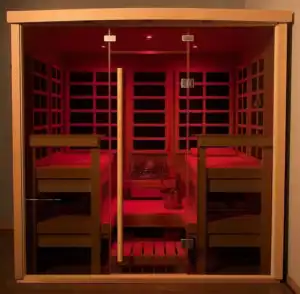
Here’s something worth understanding up front: an infrared sauna warms your body differently than a traditional one. Instead of heating the surrounding air, infrared panels warm your skin and tissue more directly, which is why users typically work up a good sweat at noticeably lower air temperatures. That lower operating temperature is a big part of what makes infrared saunas comfortable to use in a warm, humid state like North Carolina.
Think of it this way – dry air acts like insulation, requiring higher temperatures to achieve the same physiological response. Humid air, however, conducts heat more readily. This means North Carolina residents can achieve therapeutic benefits at lower sauna temperatures (typically 110-135°F) while residents in dry climates might need temperatures approaching 150°F for similar results.
The Science Behind Infrared Saunas and Humid Climates
How Humidity Enhances Infrared Heat Penetration
Understanding the differences between full spectrum vs far infrared sauna technology becomes crucial when considering North Carolina’s climate conditions. Because infrared warms the body directly rather than heating the air around you, many users find they can reach a comfortable, therapeutic sweat at lower air temperatures than a traditional sauna requires, which is a real advantage in a humid climate where hot, heavy air can feel oppressive.
Here’s a practical example: A person using an infrared sauna in Phoenix might need 20-25 minutes at 140°F to achieve the same deep tissue heating that someone in Charlotte experiences in 15 minutes at 125°F. That’s not just more comfortable – it’s more energy efficient and easier on your cardiovascular system. When comparing infrared vs traditional sauna performance in humid climates, the advantages become even more pronounced.
Heat Adaptation Benefits Specific to NC Residents
Living in North Carolina, with its long, warm summers, means your body already spends a good part of the year adapting to heat. Regular, controlled heat exposure builds on that: over time, the body becomes more efficient at cooling itself and managing thermal stress.
Regular infrared sauna use here triggers what exercise physiologists call “enhanced heat shock protein production.” These cellular protectors help your body manage thermal stress more effectively. In NC’s climate, this adaptation happens faster and more completely than in drier environments.
Seasonal Benefits: Maximizing Your Infrared Sauna Year-Round
| Season | Optimal Temperature | Session Length | Best Timing | Key Benefits |
| Summer (Jun-Aug) | 115-125°F | 15-20 minutes | 6-8 AM or after 7 PM | Heat adaptation, improved cooling efficiency |
| Fall (Sep-Nov) | 120-130°F | 20-25 minutes | Mid-morning or evening | Allergy relief, immune support |
| Winter (Dec-Feb) | 125-135°F | 25-30 minutes | Anytime | Joint health, vitamin D support |
| Spring (Mar-May) | 120-130°F | 20-25 minutes | Mid-morning or evening | Allergy management, athletic preparation |
Summer Strategy: When Everyone Thinks You’re Crazy
“Should I use a sauna in summer?” I hear this question constantly. Yet summer might be the most beneficial time for infrared sauna therapy in North Carolina. Research in the Journal of Applied Physiology found that about ten days of heat acclimation improved subjects’ exercise capacity, raising VO2max by roughly 5% in cool conditions and 8% in the heat.
Timing is what makes it work. Use your infrared sauna early morning (6-8 AM) or evening (after 7 PM) when outdoor temperatures are more manageable. Athletes have long since figured this out – expert consensus in the British Journal of Sports Medicine identifies heat acclimatization as the single most effective step for reducing physiological strain and improving performance in hot conditions.
Winter Wellness: The Underutilized Season
North Carolina winters are weird. One day it’s 70°F and you’re in shorts; the next it’s 35°F with a biting wind. This temperature volatility is harder on your body than consistent cold, and infrared saunas offer a unique solution.
The joint health benefits are particularly relevant for North Carolinians. Our winter weather patterns create ideal conditions for arthritis flare-ups and general joint stiffness. Clinical studies on infrared therapy demonstrate significant pain reduction and improved mobility in patients with rheumatoid arthritis after regular sauna use.
Energy Efficiency and Cost Considerations
| Sauna Type | Power Usage | Heat-up Time | Cost per Session | Monthly Cost (12 sessions) |
| Infrared (2-3 person) | 1.5-3 kW | 20-25 minutes | $0.50-$0.75 | $6-$9 |
| Traditional (2-3 person) | 6-8 kW | 45-60 minutes | $1.50-$2.50 | $18-$30 |
| Spa Visits | N/A | N/A | $25-$50 | $300-$600 |
Based on Duke Energy residential rates averaging $0.12/kWh
Let’s talk money, because that’s usually what clinches the decision. Understanding how much does a sauna cost to run becomes crucial when making this investment decision.
Here’s the NC-specific advantage: our moderate winter temperatures mean your infrared sauna doesn’t have to work as hard to reach optimal operating temperature. Learning how much electricity does a sauna use in different climates helps you understand why NC residents see better efficiency.
A typical home infrared sauna (2-3 person unit) costs approximately $0.50-$0.75 per hour to operate in North Carolina, compared to $1.50-$2.50 for a traditional sauna. Using your sauna 3-4 times per week, you’re looking at roughly $8-12 monthly in electricity costs – less than most gym memberships.
Practical Implementation Guide for NC Residents
| Component | Standard Climate | North Carolina Requirements | Why It Matters |
| Foundation | Basic concrete pad | Vapor barrier + drainage | Prevents moisture migration |
| Ventilation | 4-6 air changes/hour | 6-8 changes + HRV system | Controls humidity buildup |
| Wood Type | Any cedar | Western Red Cedar preferred | Superior moisture resistance |
| Electrical | Standard GFCI | GFCI + AFCI, wet-rated | Humid climate safety |
Humidity Management Techniques That Actually Work
Installing an infrared sauna in North Carolina isn’t like installing one in Colorado. Understanding proper home sauna installation becomes even more critical in our humid climate. The sweet spot for NC installations is 6-8 air changes per hour with a heat recovery ventilator (HRV) system.
Finnleo, one of the premium sauna manufacturers available through local dealers like Epic Hot Tubs, specifically engineers their models for humid climate installation. When weighing indoor vs outdoor saunas for North Carolina homes, understanding these placement requirements becomes crucial.
| Heat Index | Recommended Action | Session Length | Special Precautions |
| Below 90°F | Normal use | 20-30 minutes | Standard hydration |
| 90-99°F | Reduce intensity | 15-25 minutes | Extra water, electrolytes |
| 100-104°F | Caution advised | 10-15 minutes | Morning/evening only |
| 105°F+ | Consider postponing | 5-10 minutes max | Medical clearance if health issues |
Regular maintenance schedules need adjustment for our climate. Proper sauna maintenance 101 becomes even more important in North Carolina’s challenging climate.
Health Benefits Amplified by NC’s Climate
Cardiovascular Health in Humid Conditions
When considering sauna vs hot tub health benefits, infrared saunas may offer cardiovascular advantages worth considering. A review of the published evidence in Canadian Family Physician found limited-to-moderate evidence that far-infrared sauna use can help normalize blood pressure, with infrared heat penetrating more directly than the warmed air of a traditional sauna.
The cardiovascular research on regular sauna bathing is compelling. A long-term study of Finnish men, published in the American Journal of Hypertension, followed 1,621 participants for about 22 years and found that those who bathed 4-7 times weekly had nearly a 50% lower risk of developing hypertension than those who went just once a week. That research involved traditional saunas, but it speaks to the broader cardiovascular value of regular, consistent heat therapy.
Skin Health Benefits
Living in North Carolina presents unique skin challenges. High humidity can exacerbate fungal conditions, clog pores, and create an environment where bacteria thrive. The deep-tissue heating effect of infrared radiation triggers intensive sweating that’s different from humidity-induced perspiration, helping purge toxins and bacteria from skin pores more effectively.
Addressing Common Concerns
“Too Hot in Summer” Myth-Busting
When you’re outside in 95°F weather with 70% humidity, your body is fighting an uphill battle. Infrared sauna heat, by contrast, is controlled, time-limited, and purposeful. Research from the Cleveland Clinic shows that 15-20 minutes of controlled heat exposure actually improves your body’s ability to handle environmental heat stress.
| Aspect | Infrared Sauna | Traditional Sauna |
| Operating Temperature | 110-135°F | 160-200°F |
| Humidity Tolerance | Excellent (works better in humid conditions) | Poor (humidity reduces efficiency) |
| Energy Efficiency | 1.5-3 kW per hour | 6-8 kW per hour |
| Heat-up Time in NC Climate | 15-25 minutes | 45-60 minutes |
| Year-round Usability | Excellent | Good (less comfortable in summer) |
Your North Carolina Advantage
Here’s what it comes down to: for most North Carolina homeowners, our humid subtropical climate is no obstacle to enjoying an infrared sauna. Its lower operating temperatures make it comfortable to use year-round, and regular sessions support heat adaptation along with the cardiovascular benefits associated with consistent heat therapy.
The science is clear, the benefits are real, and the timing has never been better. Our climate isn’t working against us – it’s working for us, if we’re smart enough to use it right.
Ready to explore your options? Browse our selection of saunas designed specifically for North Carolina’s unique climate challenges and discover how the right infrared sauna can transform your home wellness routine year-round.
Frequently Asked Questions
Is it safe to use an infrared sauna during North Carolina’s heat advisories?
While generally safe, sessions should be shortened to 10-15 minutes when heat index exceeds 100°F, and timing should be adjusted to early morning or evening hours. Always prioritize hydration and listen to your body’s signals. If you have cardiovascular conditions, consult your physician before using during extreme heat events.
How do infrared saunas perform during North Carolina’s humid summers compared to traditional saunas?
Infrared saunas actually outperform traditional saunas in humid conditions because they heat your body directly rather than heating humid air. This means more efficient therapeutic benefits at lower temperatures (110-135°F vs 160-200°F), reduced energy consumption, and better comfort during our sticky summer months.
What’s the optimal frequency for infrared sauna use in North Carolina’s climate?
Research suggests 3-4 sessions per week for optimal cardiovascular and heat adaptation benefits. In NC’s climate, this frequency helps maintain thermal tolerance for our variable weather while providing consistent wellness benefits. Sessions can be adjusted seasonally – longer in winter (20-30 minutes), shorter during summer heat waves (15-20 minutes).
Do infrared saunas help with seasonal allergies during North Carolina’s intense pollen seasons?
Yes, the gentle heat helps open nasal passages and improve circulation to sinus tissues without the intensity of steam saunas. Regular use during peak pollen seasons (typically March-May and September-October in NC) can help reduce allergy symptoms and improve respiratory function, though it’s not a replacement for medical allergy treatment.
What installation considerations are specific to North Carolina’s humid climate?
Proper moisture management is crucial, including vapor barriers under concrete foundations, enhanced ventilation systems (6-8 air changes per hour with heat recovery), and Western Red Cedar construction for superior humidity resistance. Electrical components must be rated for wet locations, and outdoor installations require elevated platforms with excellent drainage to handle our frequent precipitation.
Have questions, or want to see options in person? Stop by any of our five North Carolina showrooms and talk it through with our team: Raleigh, Durham, Sanford, Charlotte, or North Charlotte. We are open 7 days a week, no appointment needed.

About The Author:
Richard Horvath
Hot Tub & Spa Expert
Richard has been in the hot tub & spa industry for years. As a long hot tub & swim spa owner himself, Richard has a passion for helping homeowners create their dream backyard, helping over one thousand North Carolina homeowners achieve that dream in the process.


